
Last updated November 15, 2026
 Architectural shingles
 Metal roofing
 Tile roofing
 GAF
 Owens Corning
 Flat & low-slope
Free roof inspection with deck photos before we talk money - GAF and Owens Corning certified installation
The Complete Roof Repair Guide for Sunrise Manor Homeowners
Most roof repair guides are written for places with wet, freezing winters. Sunrise Manor isn’t that place. Here, roofs fail in a different order and for different reasons: relentless sun, 110°F summer afternoons, sharp overnight temperature drops, and a short but violent monsoon season. A shingle that would last decades in a mild climate can show its first cracks here far sooner, and not because a storm tore it apart. Heat did the work quietly. This guide maps repair decisions to the damage patterns this climate actually produces, in order of urgency, so you know what to fix now and what can wait. Roofing Sunrise Manor works on roofs across the valley, and what follows is how we think about them.
Quick Answer
Roof repair in Sunrise Manor usually starts with heat and UV damage, not storm damage. The most common repairs are cracked or brittle shingles, dried-out sealant and flashing, loose or broken concrete tiles, and seam failures on flat and low-slope roofs. Fix active leaks and exposed underlayment right away; surface granule loss and minor cosmetic wear can often be watched through one more monsoon season. A free inspection tells you which category your roof is in before you spend anything.
Styles & brands we work with
- Architectural shingles
- Metal roofing
- Tile roofing
- GAF
- Owens Corning
- Flat & low-slope
Table of Contents
- Why Sunrise Manor Roofs Age Faster Than You’d Expect
- Thermal Cycling: The Damage Pattern Most Guides Miss
- Repair Priority Matrix: Fix Now vs. Monitor
- Flat and Low-Slope Roofs Need Different Repair Logic
- Material-Specific Repair: Concrete Tile, Asphalt, and TPO
- How to Document Damage Before You Call Anyone
- Common Mistakes to Avoid
- When to Call a Professional
Why Sunrise Manor Roofs Age Faster Than You’d Expect
The same asphalt shingle installed in the Pacific Northwest and installed here do not age at the same rate. Coastal and northern climates are hard on roofs too, but in a different way: persistent moisture, freeze-thaw cycles, moss. Sunrise Manor’s challenge is sustained ultraviolet exposure and heat. Summer afternoons push well past 110°F, and the sun hits an unshaded roof for most of the day. That combination breaks down the oils in asphalt and the binders that hold shingle granules in place, and it does so faster than most homeowners expect.
What that means in practice is that a roof in Sunrise Manor can look fine from the street and still be closer to the end of its service life than its calendar age suggests. The damage is often thermal and chemical rather than mechanical, so there’s no dramatic missing-shingle scene to catch your eye. Instead you get granule loss, slight curling at the edges, and sealant strips that have baked hard and stopped gripping. Those are the early warning signs here, and they’re easy to misread as “normal.”
This is also why we treat a roof inspection as a real diagnostic step and not a sales visit. On a Sunrise Manor roof, the question isn’t only “is it leaking?” It’s “how much of this material’s useful life has the heat already taken?” Knowing that changes whether a repair makes sense or whether you’d be spending money on a roof that’s already near replacement. We install across seven leading brands, so a recommendation is shaped by what fits your roof and budget, not by a supplier contract.
Thermal Cycling: The Damage Pattern Most Guides Miss
Sunrise Manor’s day-to-night temperature swing is the single most underrated cause of roof damage in this valley. A roof surface can bake through a hot afternoon and then cool sharply overnight, and that cycle repeats nearly every day of the year. Materials expand when they heat and contract when they cool. Do that thousands of times and something has to give.
On asphalt shingles, thermal cycling shows up as cracking along the shingle field and stress at the fasteners. The shingle doesn’t fail because something hit it. It fails because it has flexed and relaxed so many times that the asphalt has lost its give. This is very different from hail or impact damage, which leaves distinct bruises or punctures. Hail is uncommon here, so if you’re seeing widespread cracking, heat and thermal movement are the likelier explanation.
On concrete tile roofs, the same cycling works on the mortar and the fasteners holding each tile. Tiles themselves are tough, but the material between them and the screws or nails beneath them move at different rates. Over time you get hairline cracks in the bedding, loosened tiles, and small gaps that let wind-driven monsoon rain in.
On flat roofs, thermal movement shows up at the seams and around penetrations, where the membrane is constrained. It pulls and relaxes until a seam opens. In our experience, this is why so many flat-roof leaks in Sunrise Manor start at a seam or a vent boot rather than in the middle of the field.
- What thermal cracking looks like: fine lines across shingle tabs, curled edges, loose tiles, seam separation on flat roofs.
- What it isn’t: impact bruises, punctures, or storm-driven missing sections.
- Why it matters: thermal damage is progressive. Small cracks widen and let water past the surface layer, which is when real leaks begin.
Repair Priority Matrix: Fix Now vs. Monitor
Not every roof problem is urgent, and treating them all as emergencies is how homeowners get talked into work they don’t need. The trick is sorting damage by what it will do if you leave it alone. Here’s how we rank repairs on a Sunrise Manor roof, from most to least urgent.
Fix Immediately
- Active leaks or water stains on ceilings and walls. Water is already inside the assembly. Every monsoon storm makes it worse and can reach insulation and drywall.
- Exposed underlayment or missing shingles/tiles. The protective layer is gone and the deck is open to sun and rain.
- Open seams or punctures on a flat roof. These let water straight into the building.
- Failed flashing around chimneys, vents, and wall intersections. Flashing is where most leaks begin, and dried sealant here fails fast in the heat.
- Sagging deck areas. This can point to moisture damage or a structural issue that needs eyes on it now.
Fix Soon, Before the Next Monsoon
- Hairline cracks in shingles with no sign of leaking yet.
- Loose or lifted concrete tiles over intact underlayment.
- Cracked mortar in tile bedding that hasn’t opened a path for water.
- Granule loss that’s started to expose the shingle mat.
Monitor
- Even, moderate granule wear with no bare spots.
- Minor cosmetic fading or discoloration.
- Older sealant that’s still holding.
A roof in the “monitor” category can often make it through one more monsoon season if you keep an eye on it and re-check after big storms. The key is knowing which category you’re in, and that’s exactly what a standalone inspection tells you. Request a free estimate if you’re not sure where your roof falls.
Flat and Low-Slope Roofs Need Different Repair Logic
A lot of Nevada tract homes have flat or low-slope sections, and they fail and get repaired on completely different rules than pitched roofs. On a pitched shingle or tile roof, gravity sheds water quickly and the material’s main job is to stay intact. On a flat roof, water sits and moves slowly toward drains and scuppers, so the membrane and every seam and penetration become the critical points.
That changes what a repair looks like. On a flat roof, you’re less often replacing whole sections and more often chasing specific failure points: a seam that’s separated, a vent boot that’s cracked, a drain that’s clogged and ponding water, or a patch where the membrane has blistered. Ponding water is a particular concern in Sunrise Manor because it stresses the membrane and speeds up its breakdown under the sun.
TPO is one of the most common flat-roof membranes in this area, and it generally holds up well to UV. But it’s not immune. Seams are solvent-welded or taped, and heat and thermal movement work on those joints over time. When a TPO roof leaks, the source is frequently a seam, a penetration, or a termination at a wall or edge rather than the field of the membrane itself.
- Check the drains: clogged drains cause ponding, and ponding shortens membrane life.
- Look at seams: lifting, cracking, or separation along welded or taped joints.
- Inspect penetrations: vents, pipes, and HVAC curbs are common leak points.
- Watch the edges: terminations and flashings at walls and parapets take the most thermal stress.
If you’ve got a flat section that’s been patched more than once, it’s worth having it looked at properly rather than patched again. Sometimes roof repair is the right call; sometimes the membrane has reached the point where replacement is the honest answer. We’ll tell you which.
Material-Specific Repair: Concrete Tile, Asphalt, and TPO
Three roof types dominate Sunrise Manor homes, and each repairs differently. Knowing what you have helps you ask better questions and understand the estimate you get.
Concrete Tile
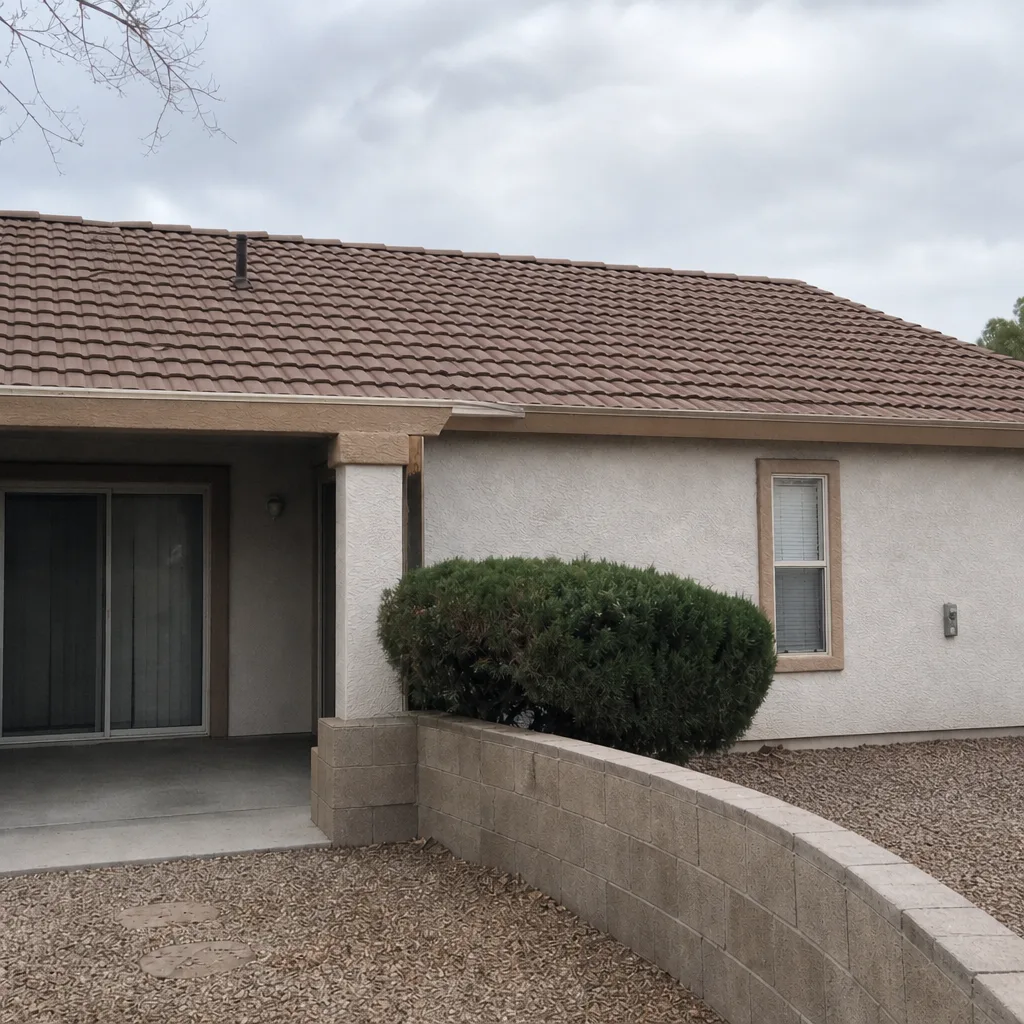
Concrete tile is durable and handles the sun well, but the tile isn’t usually the failure point. The underlayment beneath it and the fasteners and bedding holding the tiles are. Over time, UV breaks down underlayment just like it does shingles, and thermal movement loosens fasteners and cracks mortar. A repair often means carefully lifting tiles, replacing damaged underlayment or flashing, and resetting the tiles. It’s labor-intensive but preserves the look of the roof, and matching replacement tiles to what’s already there matters. That’s one place our multi-brand product knowledge helps, since matching materials to an existing installation keeps the roof looking consistent.
Asphalt Shingles
Asphalt is the most common roof covering, and in Sunrise Manor it takes the full brunt of the sun. Repair typically involves replacing cracked or curled shingles, re-sealing lifted tabs, and fixing flashing. On shingles, granule loss is the tell: when the granules are gone and the mat shows through, that area is nearing the end of its life. We install shingles from brands like Owens Corning, IKO, and Atlas, which means when we repair or replace a section, we can match the material to what’s already on your roof rather than putting a mismatched patch in the middle of it.
TPO Flat Roofs
TPO repairs center on seams, penetrations, and terminations. A trained technician can re-weld or patch a seam, replace a failed boot, or correct a termination. The important part is finding the actual source rather than patching over it. On a flat roof, water can travel along the top of the deck before it finds a place to come through, so the leak inside often isn’t directly under the damage outside.
How to Document Damage Before You Call Anyone
If you think you’ll file an insurance claim, the work you do before a contractor arrives can make the difference between a smooth claim and a frustrating one. Insurers want evidence, dates, and a clear description of what happened and when. Here’s how to gather it.
- Photograph everything, safely. From the ground, use a zoom lens or your phone’s zoom to capture cracked shingles, missing tiles, and any interior water stains. Never climb on the roof to get a better shot.
- Record the dates. Note when you first saw interior staining, when a monsoon storm passed through, and when you noticed exterior damage. A simple log on your phone works.
- Document interior damage too. Photograph ceiling and wall stains, and place a bucket or towel to catch drips, photographing that as well. Note the size and spread of the stain over time.
- Save receipts and correspondence. Keep any receipts for temporary fixes, and keep a copy of your policy and any prior inspection reports.
- Write a plain description. Explain what you observed in your own words, without guessing at cause. Let the professional assess the cause.
Do this before you call, and you’ll have a clear record when the adjuster or contractor asks. It also keeps the conversation focused on what the roof actually needs. Once you’re ready, we can work with your insurer to make the process easier.
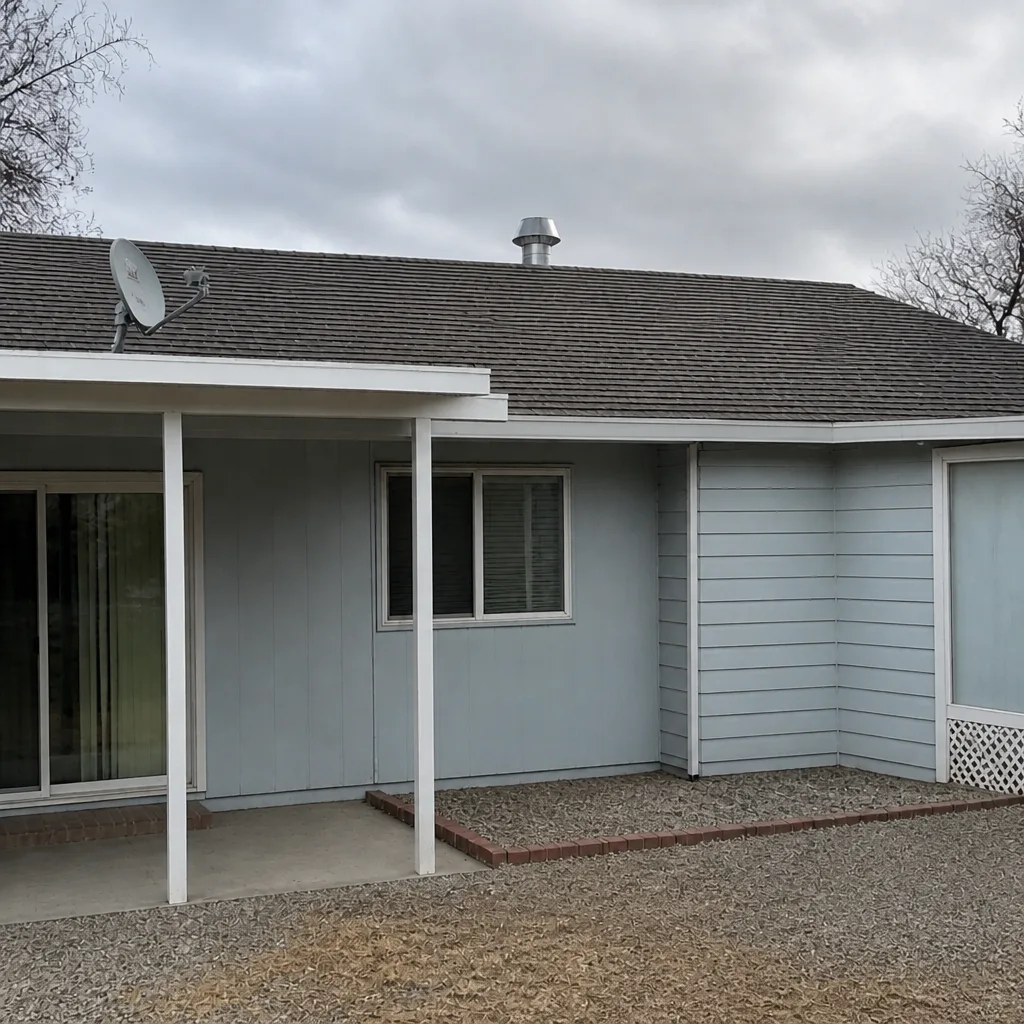
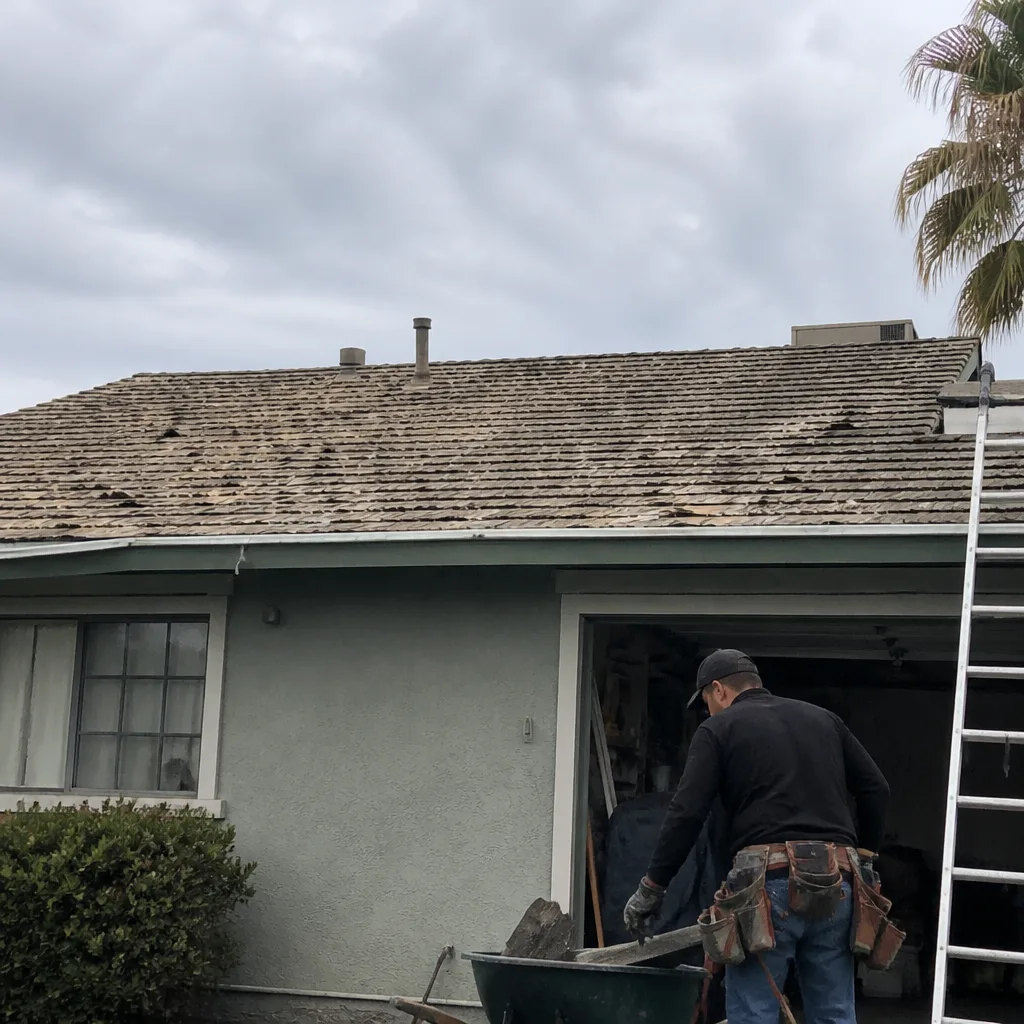
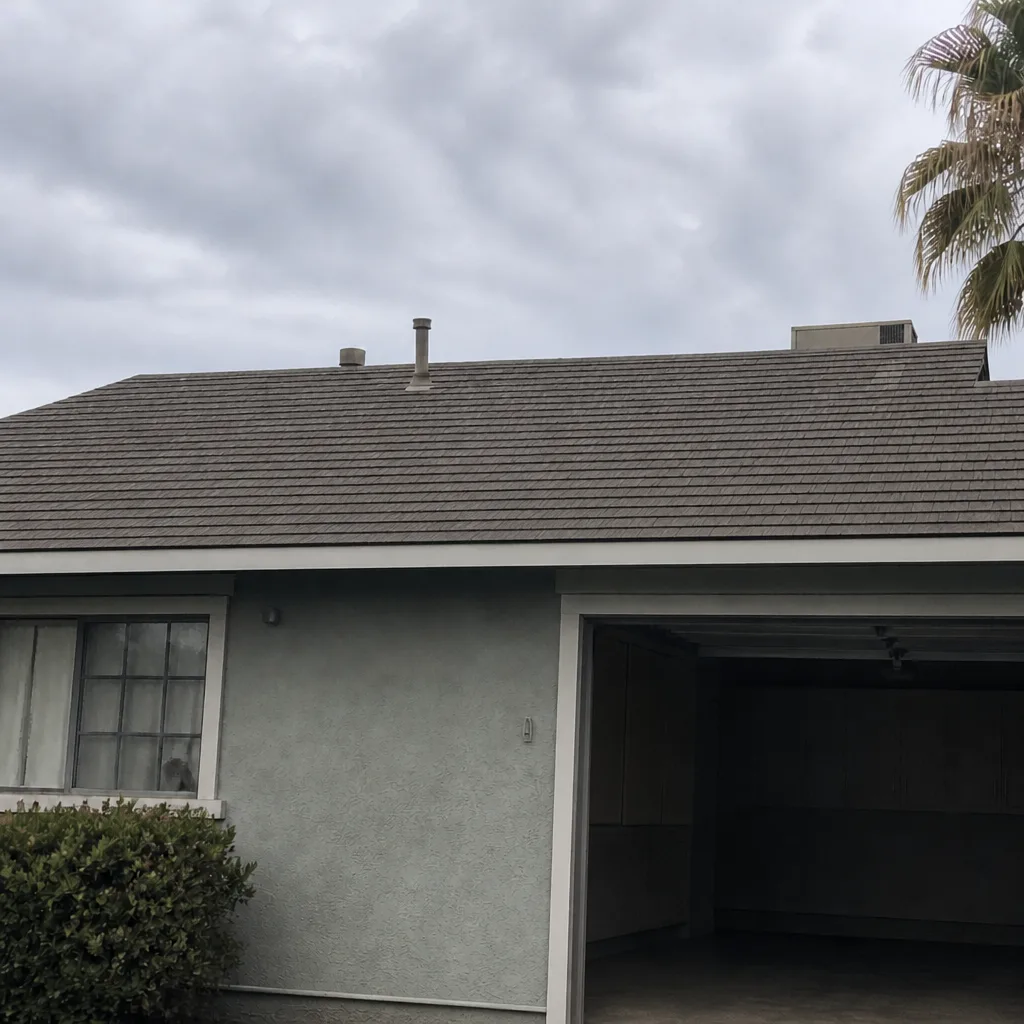
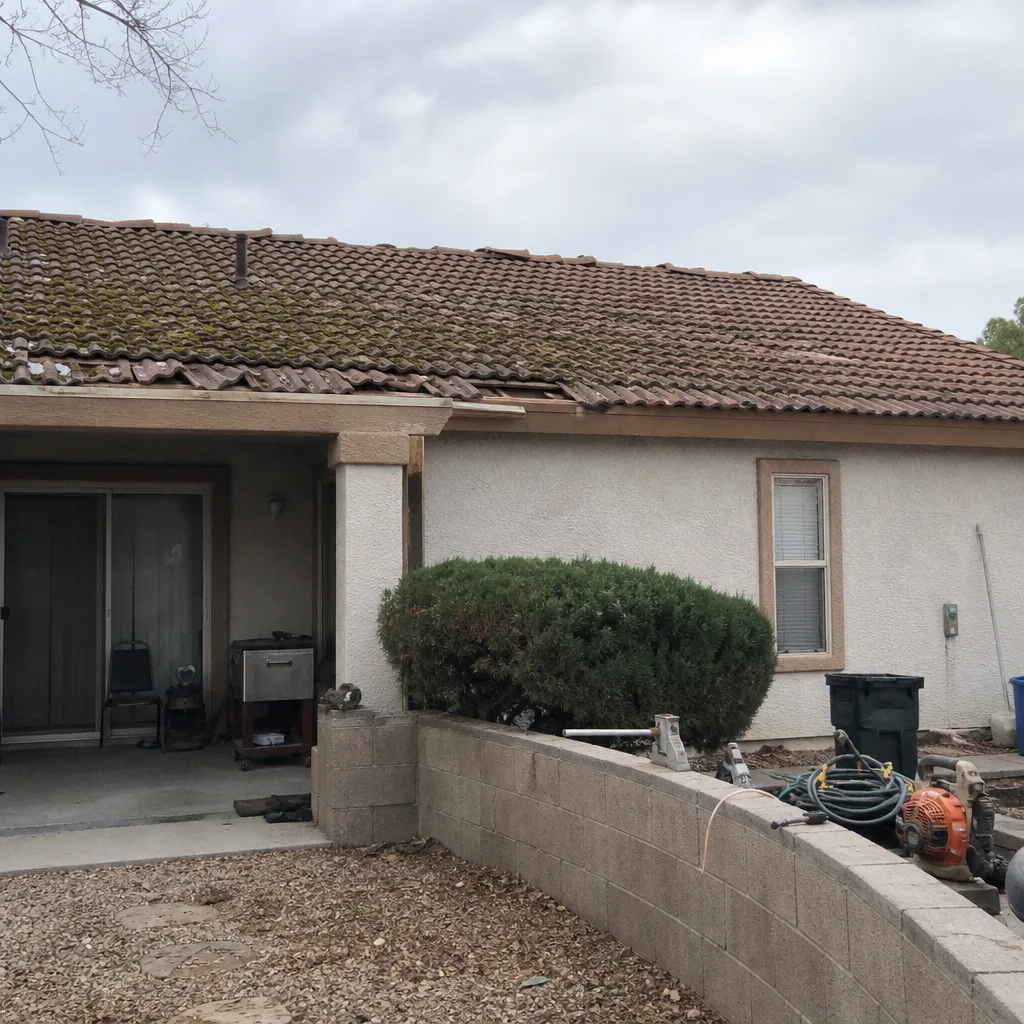
See the difference
 Before
 After
 Before
 After
 Before
 After
Common Mistakes to Avoid
- Patching a symptom instead of the source. Sealing a ceiling stain or smearing sealant over a crack doesn’t fix the leak. On a flat roof especially, water travels, so the entry point may be far from the stain.
- Assuming a storm caused the damage. In Sunrise Manor, most wear is heat and UV, not hail or wind. Misreading the cause can lead to the wrong repair and a repeat problem.
- Waiting through “just one more” monsoon without a real look. A monitored roof is fine if you’ve actually confirmed it’s in good shape. Guessing and hoping is how small thermal cracks become interior water damage.
- Skipping the inspection and going straight to replacement quotes. You can’t know whether you need a repair or a replacement until someone has looked at the roof with a diagnostic eye. A standalone inspection answers that first.
- Letting one brand limit your options. If a contractor installs only one manufacturer’s products, the recommendation tends to follow the inventory. A material-agnostic approach fits the roof and budget instead.
- Ignoring drainage on flat sections. Clogged drains and scuppers cause ponding, and ponding is one of the fastest ways to kill a flat roof in this climate.
- Not documenting before calling. Starting the claim process with photos and dates saves time and prevents disputes about what was damaged and when.
When to Call a Professional
Some things you can check yourself from the ground: granule loss, cracked shingles, loose tiles, clogged drains, and ceiling stains. What you shouldn’t do is climb up and diagnose or repair a roof yourself, particularly if there’s structural sagging, exposed decking, or a live leak. Roofs are dangerous to work on, and thermal damage is often worse than it looks from a ladder.
Call a professional when you see active leaks, missing or exposed material, sagging, repeated leaks after a patch, or widespread cracking that suggests the roof is nearing the end of its life. Also call if you’re unsure whether the damage is worth a claim, since a proper inspection clarifies that before you spend anything.
Roofing Sunrise Manor offers free estimates in Sunrise Manor. Call (888) 849-9122 to schedule yours. We answer 24/7. Fast dispatch from 7am to 7pm, Sunday through Friday. Our technicians have up to 12 years of experience, and we handle inspection, repair, and replacement under one roof so you’re never handed off mid-job.
Frequently Asked Questions
Roof repair in Sunrise Manor is priced per job based on the written estimate, and the exact range depends on the material, the size of the damaged area, and whether the underlying structure is affected. A small shingle or flashing repair will cost far less than a section of flat-roof membrane or a tile underlayment repair. The estimate is free and itemized, so you know what you’re paying for before any work starts. Call (888) 849-9122 for an exact quote.
Yes, roof repairs can be done through the summer, though work is often scheduled to avoid the worst of the afternoon heat. Heat itself isn’t usually the obstacle; the real issue is that summer sun shows you the damage more clearly. A repair done now, before the monsoon season, protects the roof from the rain that follows. Call (888) 849-9122 to get on the schedule.
It depends on how much of the roof’s useful life the heat has already taken. Localized damage, cracked shingles, failed flashing, or a few loose tiles can usually be repaired. Widespread granule loss, sagging, or repeated leaks after prior repairs often point to replacement. That’s why we offer a standalone inspection: it tells you which situation you’re in before you commit to anything. Call (888) 849-9122 for a free estimate.
No, the written estimate sets the final price, and we don’t do change orders on the agreed scope. If we open up an area and find something unexpected, we’ll show you and talk it through before doing anything that affects the price. You’ll never get a surprise bill. Call (888) 849-9122 to schedule your free estimate.
Most routine repairs, like replacing a section of shingles or fixing flashing, are completed in a single visit. Larger jobs such as a tile underlayment repair or a flat-roof seam replacement can take longer because of the careful work involved and the need to match existing materials. The estimate will give you a realistic timeline for your specific roof. Call (888) 849-9122 to talk it through.
It can be, depending on your policy and the extent of the damage, but the decision is easier once you have documentation and a professional assessment. Photograph the damage, note the dates, and keep records before you call anyone. We can work with your insurer to support your claim. Call (888) 849-9122 for a free estimate and a clear picture of what you’re dealing with.
The Bottom Line
Sunrise Manor roofs fail on a different schedule than roofs in wet, cold climates. Heat, UV exposure, and daily thermal cycling do the damage, and it shows up as cracking, dried sealant, loose tiles, and flat-roof seam failures rather than storm destruction. Whether you need a repair or a replacement comes down to how much of the material’s useful life is left, and an honest inspection tells you that before you spend a dollar. Repair when repair is right. Replace when replace is right. We install across seven leading brands so the recommendation fits your roof and budget, not a supplier contract. Start with an inspection, then decide.
Written by the team at Roofing Sunrise Manor.