
Last updated November 15, 2026
 Metal roofing
 Architectural shingles
 Tile roofing
 GAF
 Owens Corning
 Flat & low-slope
Free roof inspection with deck photos before we talk money - GAF and Owens Corning certified installation
Roofing Permits, Codes & Inspections in Sunrise Manor, NV: What You Need to Know
Most people think of a building permit as paperwork between the contractor and the county. In Sunrise Manor, it’s a document about your money. A roof replaced without the right permit can follow a house for as long as you own it: insurers can question a claim, lenders can balk at a sale, and the fix often means opening the roof back up to inspect what’s under it. This guide walks through which roofing scopes in Clark County actually need a permit, how the inspection process runs, what Title 30 zoning means for material choices near HOA areas, and what your role is as the homeowner while the work is checked. You’ll finish knowing what to ask a roofer before you sign anything.
Quick Answer
In Clark County, a full roof replacement and most structural roof work require a building permit and one or more inspections before the job is closed out. Minor repairs below the county’s threshold on an existing covering generally do not. The permit is pulled by the licensed contractor, the inspections are scheduled by that contractor, and you should keep the final inspection record with your home’s paperwork, because insurers and buyers ask for it later.
Styles & brands we work with
- Architectural shingles
- Metal roofing
- Tile roofing
- GAF
- Owens Corning
- Flat & low-slope
Table of Contents
- Which roofing projects need a permit in Clark County and which don’t
- How the Clark County building permit process works, step by step
- What happens during a roofing inspection
- Title 30 zoning and roofing material choices in Sunrise Manor
- How insurers and mortgage lenders treat unpermitted roof work
- Your role during the inspection
- What documentation to keep after the job is done
- Common mistakes to avoid
Which roofing projects need a permit in Clark County and which don’t
The short version: replacement needs a permit, minor repair usually doesn’t, and the line between them is drawn around how much of the roof is being disturbed and whether the covering itself changes.
Here’s how we explain it to homeowners across Sunrise Manor:
- Full roof replacement: a permit is required. Tearing off an existing covering and installing a new one is the clearest permit case there is.
- Changing the roof covering material: a permit is required, even when only part of the roof changes, because the material change matters structurally and for fire and wind performance. Swapping the profile or weight class of your shingles isn’t a like-for-like repair.
- Re-decking or replacing sheathing: a permit is required. Once the deck is opened and panels are replaced, the work is structural.
- Adding or enlarging vents, skylights or roof penetrations: a permit is required when the framing or flashing detail changes.
- Minor repair on an existing covering: typically exempt. Replacing a handful of damaged shingles, re-sealing a small flashing detail, or patching a localized leak is usually treated as repair, not construction. The exemption is for small, like-for-like work on the existing material, not a way to re-roof a slope a section at a time.
The practical threshold most roofing contractors use is that any repair that stays small and matches the existing material is a repair; anything that starts to look like a section replacement, or that changes what the roof is made of, gets a permit. Ask your contractor to state, in writing, whether they’re treating your job as a repair or a permitted replacement, and why.
How the Clark County building permit process works, step by step
From a homeowner’s view, the permit process is mostly invisible; the contractor runs it. But you should know what’s happening so you can tell when something is going sideways. In Sunrise Manor, roofing work runs through Clark County’s building department, not a separate city permit office, and the process goes roughly like this:
- Scope and permit application. Your contractor prepares the scope of work and applies for the permit. That application identifies the property, the contractor, the scope, and the materials. A roofer who can list your exact material and manufacturer on the application is doing the job properly.
- Plan review. The county reviews the application. Straightforward replacement jobs on a standard residential roof usually move through quickly; jobs with structural changes or unusual details take longer.
- Permit issued. The permit gets posted at the property. If you don’t see it before the first dumpster arrives, ask about it.
- Work and inspection. The contractor calls for inspections at the correct stage. For most residential roofing, that means an in-progress inspection before the covering goes down, and a final inspection once the roof is complete.
- Final sign-off. The county inspects and signs off. The permit is closed and the record becomes part of your property file.
What should your contractor be doing behind the scenes? Keeping the permit visible, coordinating the inspection timing with the crew’s schedule, making sure an inspector can actually get to the roof safely, and being on-site or reachable for the inspection rather than leaving you to handle it. We do this on every permitted job we take on, because a closed permit is the difference between a roof that gets covered by your insurance and one that gets questioned.
Timelines in Clark County vary with the county’s current workload, not with the contractor. A contractor who quotes you an exact inspection date before the permit is even issued is guessing. A contractor who promises a specific inspection window in the middle of the summer is guessing worse.
What happens during a roofing inspection
Two inspections matter on most residential replacement jobs: one before the new covering goes down, and one at the end.
The in-progress inspection checks what you’ll never see again once the roof is finished. The inspector looks at the deck, the sheathing, and any structural repairs. In Sunrise Manor, that often means checking how the deck has held up under the sun: desert heat buckles and dries out older sheathing, and an inspector who finds failing panels will require replacement before the job continues. That’s a good thing, even if it’s inconvenient. Discovering a soft panel mid-job is far cheaper than discovering it when a wind event pulls a section of shingles off next summer.
The final inspection checks the finished roof. The inspector verifies the covering is installed as permitted, that flashing details are correct, and that the material matches what was approved. Vulcanized or adhesive-set shingles hold up differently in the desert than in coastal markets, and the inspector looks at the details that matter here: how the material handles the thermal cycling between 110-degree days and cooler nights.
How long does each take? The inspection itself is usually short. The wait for the inspector’s visit is the variable. Your contractor should be coordinating that timing with the county and with the crew’s availability, so the roof is never sitting open longer than necessary. In a valley where an unexpected wind event can move through, an open roof is more than an inconvenience; it’s a risk to the interior of the house.
If your roofer has never mentioned an in-progress inspection, ask why. On a full replacement, the answer matters.
Title 30 zoning and roofing material choices in Sunrise Manor
Clark County’s land use rules live under Title 30, and in Sunrise Manor those rules can touch your material choice more than you’d expect. The big one is homeowners’ associations: many Sunrise Manor subdivisions were built with architectural restrictions layered on top of the county rules, and those restrictions often say what your roof can look like.
In practice, that means the roof covering you choose needs to satisfy two readers: the county building department and your HOA’s architectural requirements. Things to check before you pick a material:
- Colors and profiles. Sunrise Manor HOAs commonly control roof color and tile profile. A near-black shingle may be fine at the county level and refused by the association.
- Material changes. If your home was originally built with tile and you want shingles, or the reverse, expect scrutiny from both the county (because it’s a material change) and your HOA (because it changes the look of the whole street).
- Visible roof slopes. Roof slopes that face the street are the ones associations look at. On some Sunrise Manor lots, a rear slope is barely visible and the front slope is watched.
Where this gets interesting is at the edge of an HOA’s reach. Homes on the boundary of a master-planned community, or in older Sunrise Manor neighborhoods without an active association, may not have architectural review at all. Even there, Title 30 land use rules and the county’s building code still apply to safety and structure; you just don’t have a committee in the middle. We work with seven major shingle manufacturers (including IKO, Atlas, Tamko and Boral) partly because of exactly this: a homeowner under an HOA restriction may need a specific color and profile that only one or two brands can match, and a roofer who only installs one brand can’t offer that.
How insurers and mortgage lenders treat unpermitted roof work
This is where the permit stops being paperwork and starts being money.
Nevada homeowners insurance carriers generally insure the home as it exists, but a carrier reviewing a claim can ask whether roof work was permitted. If a wind or monsoon season claim hits your new roof and the work wasn’t permitted, the carrier may question coverage for that loss, ask you to prove the work was done to code, or handle the claim differently than you’d expected. The claim can become a dispute over whether the damage is a covered event or the result of non-code work. Some carriers want documentation of permitted work at underwriting review as well.
Mortgage lenders come up more at sale. Before a buyer’s lender will fund a mortgage, the property has to be insurable and the improvements on record at the county need to match what’s physically there. If you replaced a roof without a permit and the county has no record of it, the purchase can stall while the buyer’s lender asks for documentation. That’s a headache nobody wants in the middle of escrow.
The fix, when a roof was replaced unpermitted in the past, usually comes down to one of two paths:
- A retroactive inspection. The county inspects the existing roof and, if it passes, issues a permit record after the fact. This doesn’t always work, and older non-code details can fail it.
- Opening up the roof. When a retroactive inspection can’t be done or won’t pass, the roof has to come apart so the details can be verified and brought to code, which is essentially a full second replacement.
Either way, you pay twice. That’s the whole argument for pulling the permit the first time.
Your role during the inspection
You don’t need to be on the roof. But you have a role, and it’s mostly asking questions and keeping records. Here’s what you’re entitled to do while the permit is open:
- Ask what’s being inspected and when. Your contractor should be able to tell you the inspection stage and the general timing, without inventing a specific window.
- Ask to see the permit. It’s posted at the property during a permitted job. If you can’t see it, ask where it is.
- Ask the inspector a reasonable question. Inspectors are generally willing to answer a homeowner’s basic question about what they’re checking, as long as you’re not trying to alter their judgment mid-inspection.
- Ask your contractor for a copy of the final inspection sign-off. This is the record that matters years later. Get it in writing.
- Watch the paperwork trail. Permits, the scope of work, the material spec, and the final sign-off should all be in one file you can find. The day you sell, the buyer’s agent will ask for it.
Our technicians have up to 12 years of experience with permitted roofing work across Sunrise Manor, and one thing they’ve all learned is that homeowners who ask these questions get better jobs. Not because the contractor is trying to cut corners, but because asking forces clarity. If your roofer is doing a permitted job, they’ll welcome the questions. If they’re doing an unpermitted job and hoping you won’t notice, the questions will find it.
What documentation to keep after the job is done
This is the part almost everyone skips. Keep these documents together, a paper or digital folder that goes in the same place as your home’s title and tax records:
- The permit record itself. The application, the permit number, and the final inspection sign-off.
- The contractor’s scope of work. The written scope showing exactly what was replaced and what material was used.
- The material spec sheet. The exact manufacturer, product line and color. When a repair or partial replacement comes up in ten years, matching material to an existing roof is much easier with the original spec in hand. That’s a real reason we install across GAF, CertainTeed, Owens Corning and the other brands we work with: a homeowner with documentation has options for matching down the line.
- Photos taken before, during and after. Before is often the homeowner’s job: shoot the roof from the ground before the crew arrives. During and after should come from the contractor.
- The inspection report and any county correspondence. Even a routine passing inspection is worth keeping on file.
The reason this matters in Sunrise Manor specifically: summer heat and monsoon-season winds are hard on roofs, and claims do get filed. A folder of clean documentation turns a claim conversation into a formality instead of an argument.
Common Mistakes to Avoid
- Letting a “repair” turn into a replacement. A contractor who calls a full roof replacement a “big repair” to skip the permit is committing a mistake you’ll pay for when you sell. Any covering replacement needs a permit, full stop.
- Paying before the permit is issued. The permit should exist before the first dumpster is on your driveway. If it doesn’t, ask why the work is starting anyway.
- Skipping the in-progress inspection. Once the covering is down, the deck is hidden again. If the roofer tells you the in-progress inspection is “not needed,” the answer is that it is.
- Assuming the HOA and the county will agree with each other. On a Sunrise Manor home under architectural review, a material that passes county code can still be refused by the association. Check both before you order material.
- Treating a passing final inspection as the whole story. Keep the sign-off. A “passing” final inspection that was never documented is worth nothing to your insurer or your buyer.
- Believing that unpermitted work is cheap insurance to skip. The permit cost is a line item. A retroactive inspection or a second replacement is a line item that starts with a four-digit first digit.
- Jerry-rigging the flashing detail on a skylight or vent penetration to avoid an inspection. Small openings on a roof are where water gets in after a monsoon-season wind event. The inspector is checking the one detail you’ll never see from the ground.
See the difference
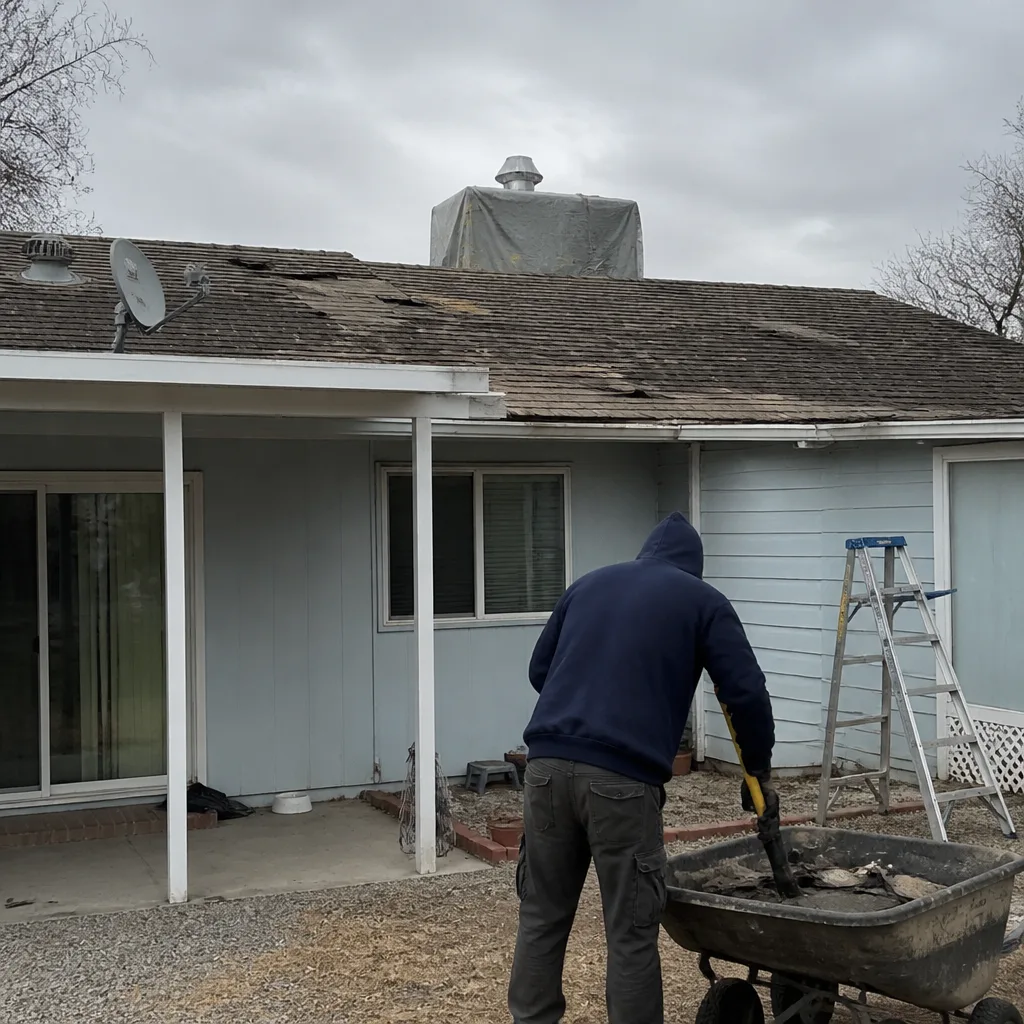 Before
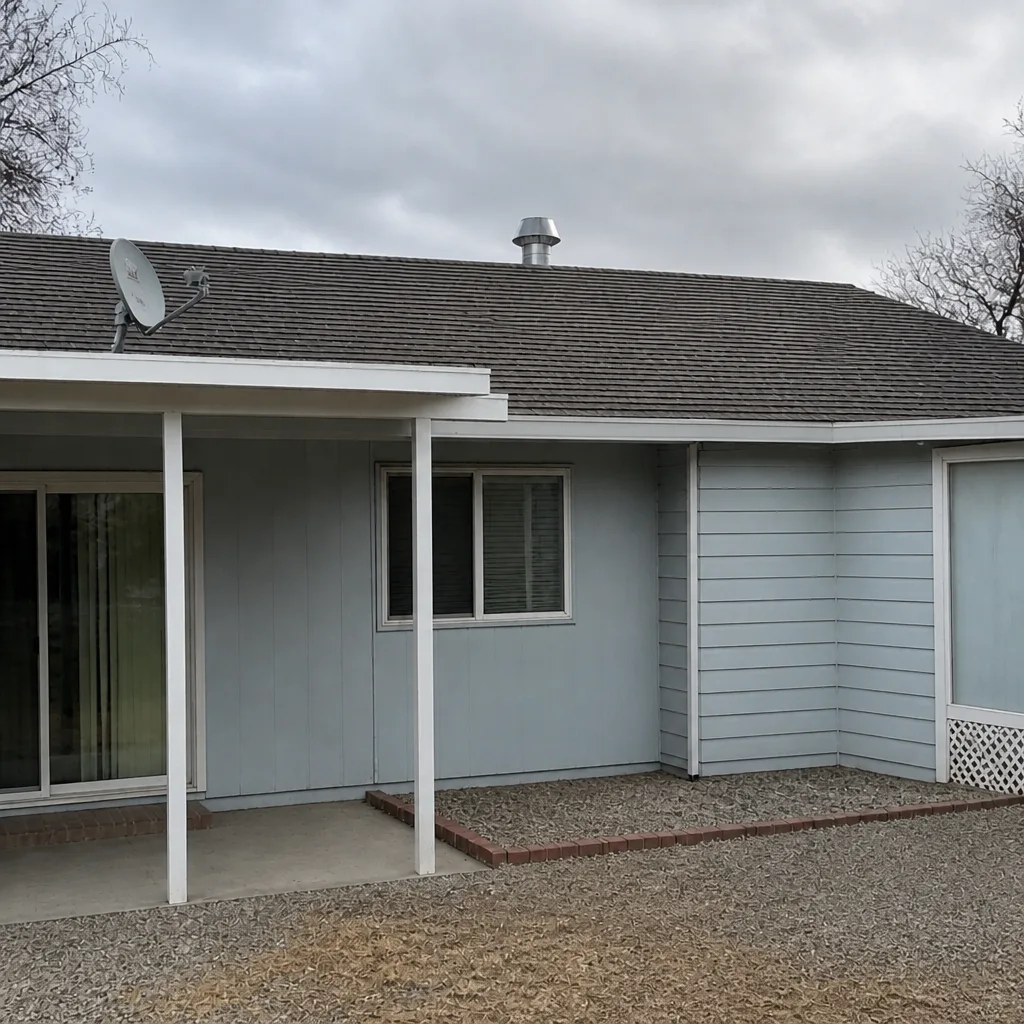 After
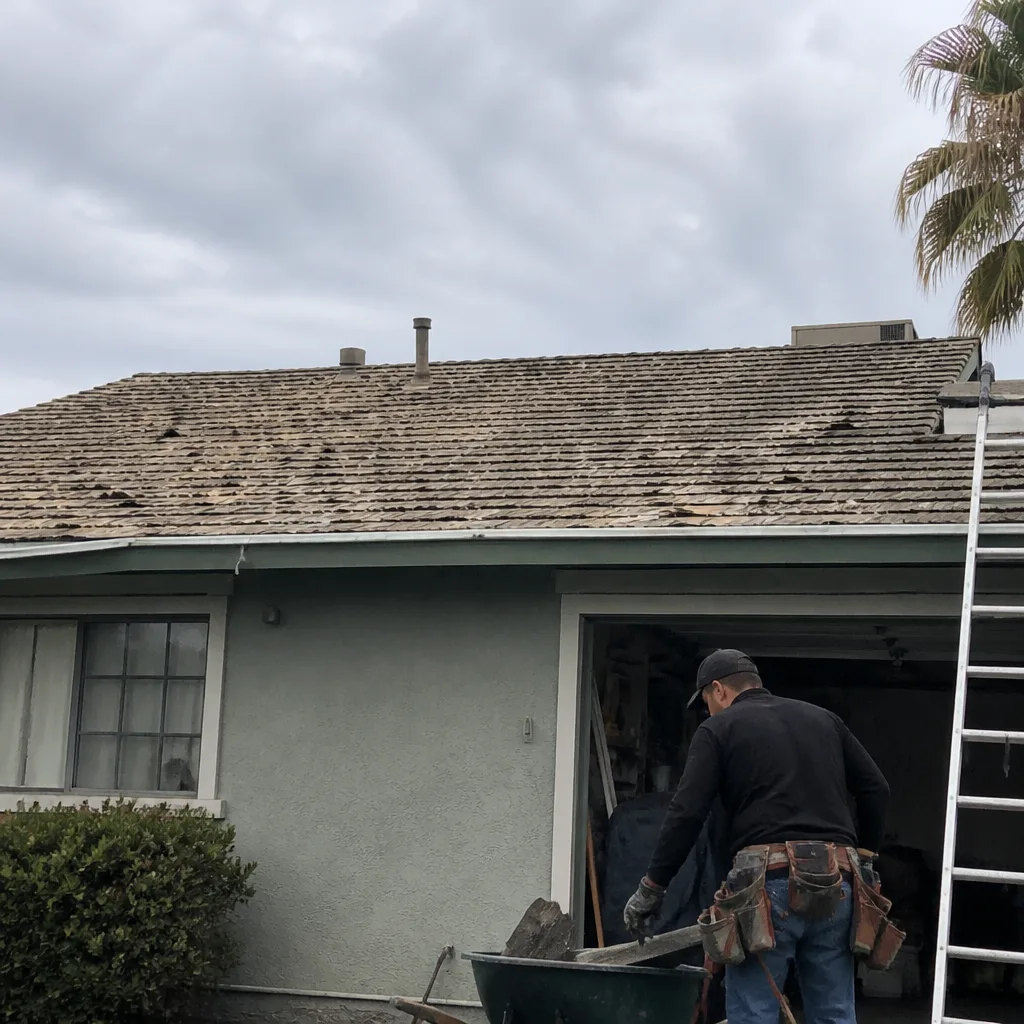 Before
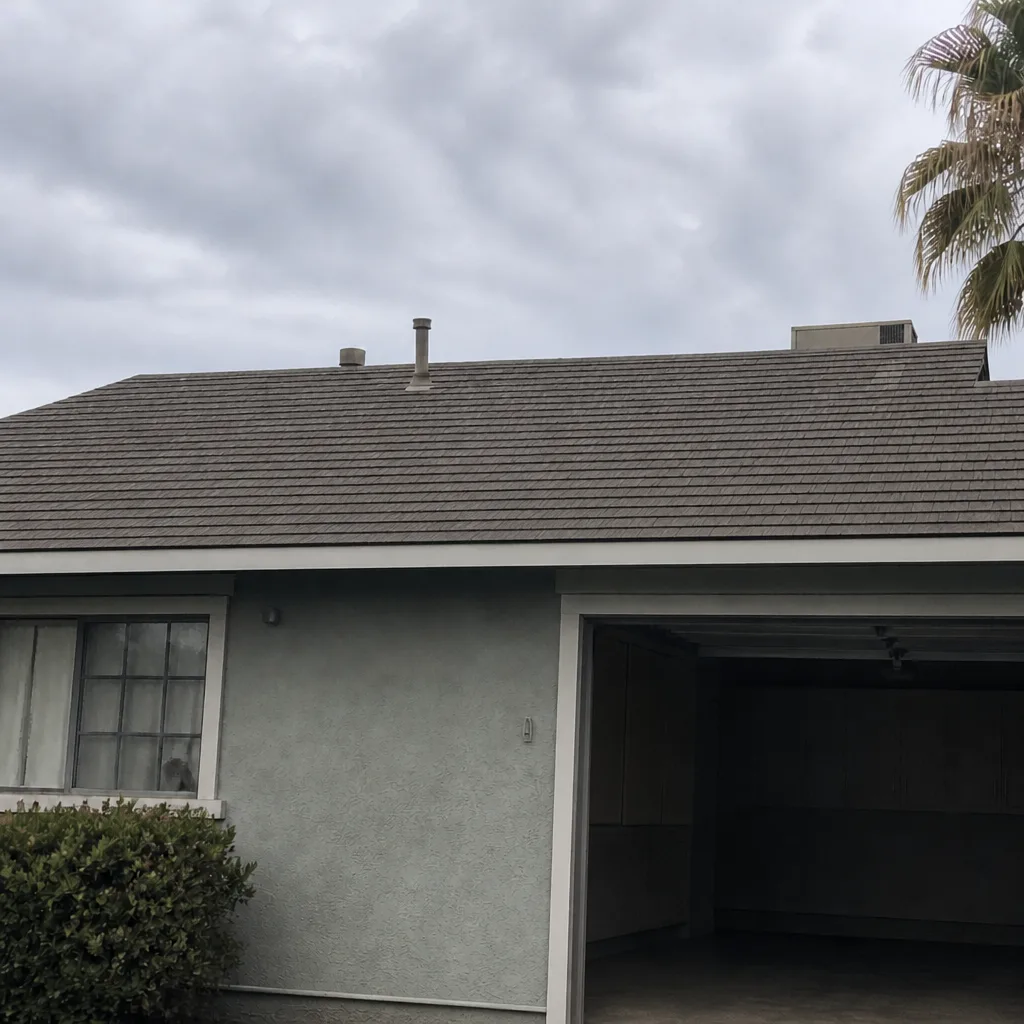 After
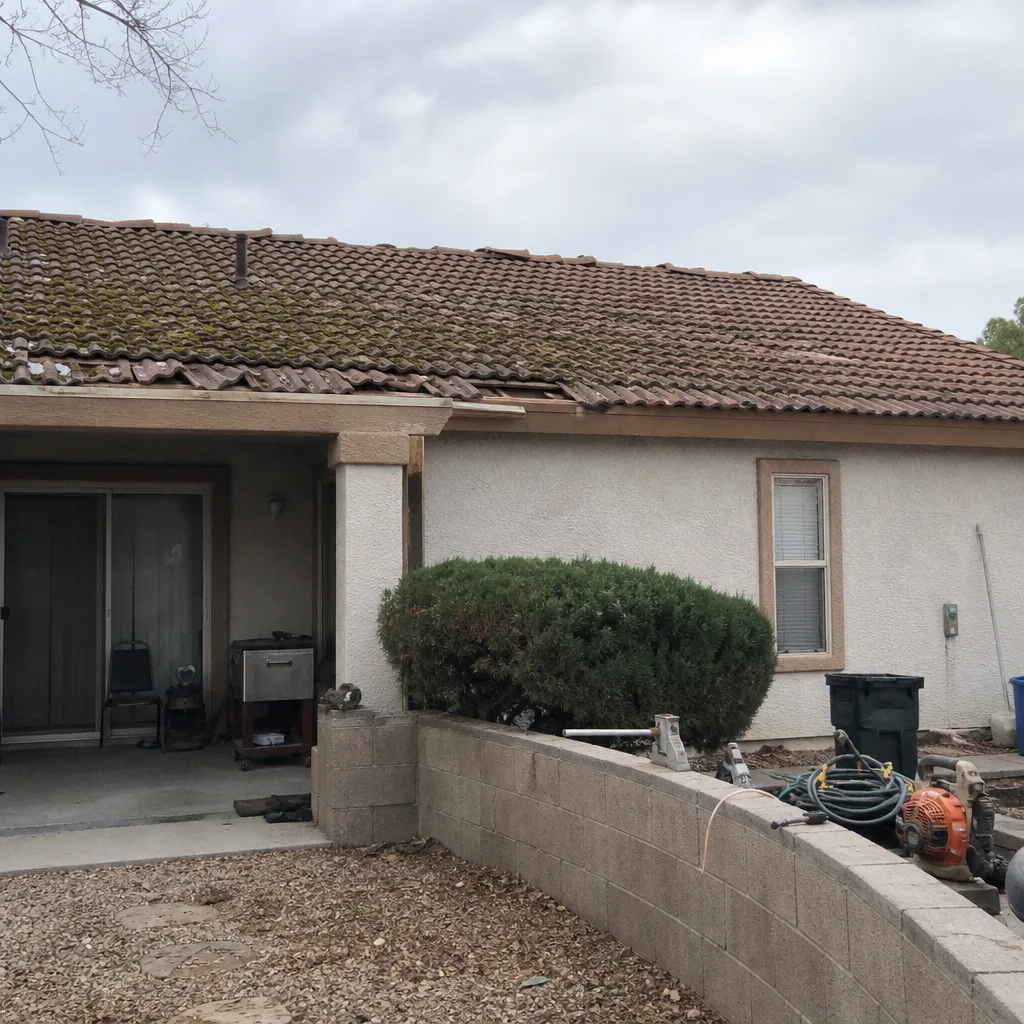 Before
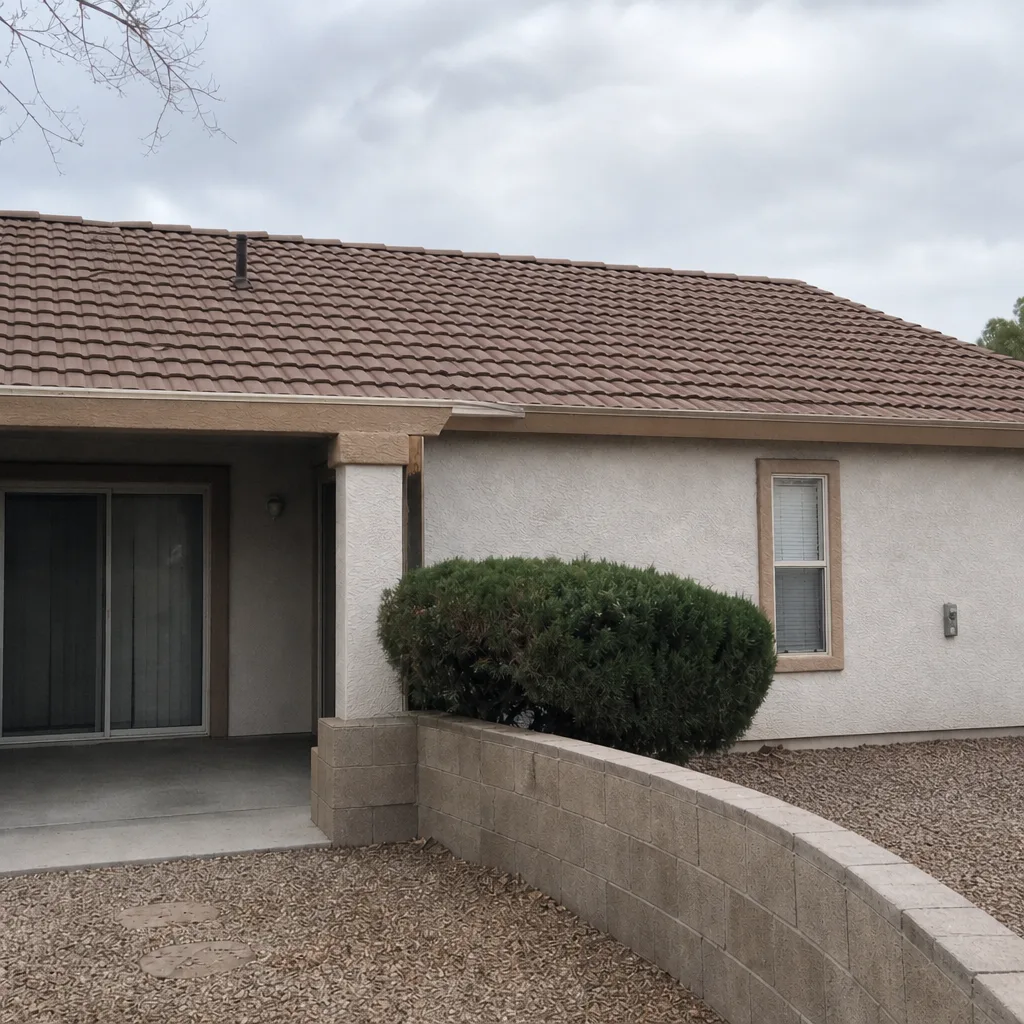 After
When to Call a Professional
Call a professional when:
- You’re being told a replacement is “small enough” to skip a permit.
- You’re buying or selling a Sunrise Manor home and the roof’s permit history is unclear.
- Your roof has been replaced within the last several years and you don’t have documentation from the work.
- An insurer or mortgage lender has asked for roof records you don’t have.
- Your HOA’s architectural rules and your planned material don’t obviously agree, and you need a roofer’s read on what’s achievable.
- You’re ready to repair or replace and want a written scope that lays out the permit path before you sign.
Roofing Sunrise Manor offers free estimates in Sunrise Manor, including a written scope showing whether your job is a permit-pulled replacement or a repair. If you’re unsure what your situation calls for, that conversation is the right first step.
Frequently Asked Questions
Yes. A full roof replacement on a Clark County home requires a building permit, including here in Sunrise Manor. Your licensed contractor applies for it, posts it at the property, and coordinates the inspection. A contractor who tries to talk you out of the permit on a replacement job is telling you something important about how they work. Call (888) 849-9122 for a free estimate with a written scope that includes the permit path.
Small like-for-like repairs on the existing covering generally qualify as exempt repair; anything that replaces the full covering, changes the material, or opens the structural deck requires a permit. The practical test is whether the work is small and matches what’s already there. If your roofer is replacing more than a handful of shingles, or a whole slope in new material, ask for a permit.
It can. Nevada homeowners insurance carriers may question a claim on a roof that wasn’t permitted, and can ask you to demonstrate the work was done to code. Coverage isn’t always refused, but the claim can be contested when the work is undocumented. Keep the permit and the inspection sign-off, and hand off both if you ever file a claim.
An active HOA’s architectural review can block a color or material it hasn’t approved, even when the county would grant the permit. Check the association’s rules before you order material. Many Sunrise Manor subdivisions have restrictions on roof color and profile that narrow which brands will work. We install across seven leading brands, so when the HOA narrows your options, we can usually still match your existing look.
The permit application, review, and inspection timeline depends on the county’s current workload, not on the contractor. A roofer who quotes an exact inspection date before the permit is issued is guessing. Your contractor’s job is to be ready for each inspection stage and to make sure the roof is never sitting open longer than the crew’s schedule requires. Call (888) 849-9122 for a free estimate and a plain-spoken walkthrough of the timeline for your job.
You have two paths: a retroactive inspection through the county, which can issue a permit record if the existing roof passes, or opening up the roof so the details can be verified and brought to code. Get a professional inspection first so you know which path you’re on before you talk to a contractor about replacement. Roofing Sunrise Manor offers a standalone inspection as a service, and you’ll get a written assessment you can hand to a lender or an insurer.
The Bottom Line
A roofing permit in Sunrise Manor is a piece of documentation that guards two things you can’t easily replace: your insurance claim and your ability to sell. Replacement, material changes, re-decking and most penetration work require a permit through Clark County. Small like-for-like repairs generally don’t. Your contractor should be pulling the permit, coordinating the in-progress and final inspections, and handing you the sign-off. Keep the permit, the scope, the material spec, and the inspection record together. If you’re unsure where your roof stands, start with an inspection before you spend a dollar on repair or replacement.
If you’re planning a roof replacement or deciding whether a roof repair is the right call, get a written estimate that spells out the permit path before any work starts. We answer 24/7, and fast dispatch runs from 7am to 7pm, Sunday through Friday, closed Saturday. Call (888) 849-9122 for your free estimate, and if you’d like to read more about our approach, start with Roofing Sunrise Manor.
Written by the team at Roofing Sunrise Manor.