
Last updated November 15, 2026
 Architectural shingles
 Metal roofing
 Tile roofing
 GAF
 Owens Corning
 Flat & low-slope
Free roof inspection with deck photos before we talk money - GAF and Owens Corning certified installation
Roof Repair Troubleshooting in Sunrise Manor: Common Problems and How to Fix Them
A water stain on your ceiling after a July storm in Sunrise Manor isn’t proof your roof leaked directly above it. In our experience, it’s just as likely to be condensation sweating off an HVAC penetration, or water that entered at a flashing transition twenty feet away and traveled sideways along a rafter before it found a way through your drywall. That gap between the symptom you see and the source that’s actually failing is why so many roofing repairs get sold twice. We wrote this guide to help you work backward from the visible sign to the real failure point, and to understand what a fair fix actually involves in Sunrise Manor.
Quick Answer
Most roof problems in Sunrise Manor trace back to one of five sources: failed pipe boots, worn flashing at wall and roof transitions, granule loss on aging shingles, thermal movement that opens sealed edges, or drainage points that can’t keep up with monsoon rain. The trick to troubleshooting is matching the symptom to its most likely source before anyone climbs a ladder. A stain near an interior corner is usually flashing. A soft spot under a vent is usually a boot. Granules in the gutter point to shingle wear, not a leak. Start with the symptom map below, then get a professional assessment before spending money on a repair that treats the wrong thing.
Styles & brands we work with
- Architectural shingles
- Metal roofing
- Tile roofing
- GAF
- Owens Corning
- Flat & low-slope
Table of Contents
- The Symptom-to-Source Map: What Your Roof Is Telling You
- Monsoon Water vs. Thermal Expansion: Two Very Different Leaks
- The Three Places Water Hides Before It Shows Up Inside
- A Homeowner Inspection Checklist You Can Do From the Ground
- Repair or Replace? How to Tell Which One You Actually Need
- Why Post-Storm Door-to-Door Repairs Often Fail
- Matching Materials to a Repair: Why Brand Flexibility Matters
- What Roof Repair Costs in Sunrise Manor
The Symptom-to-Source Map: What Your Roof Is Telling You
Roofs in Sunrise Manor fail in patterns, and those patterns repeat. When you see a symptom, it narrows the field of likely sources to two or three possibilities, which is what makes a real diagnosis faster and cheaper than a guess. Here’s how we read the most common ones.
- Brown ceiling stains: Most often flashing at a wall or roof-to-roof transition, a pipe boot, or an HVAC penetration. Stains that appear only after heavy rain point to a direct water path; stains that show up on hot afternoons point to condensation or thermal movement.
- Granules in the gutters or at downspout outlets: Shingle wear. Granules are the protective surface of a shingle, and shedding them steadily means the mat underneath is aging. This isn’t a leak yet, but it predicts one.
- Lifted or curling shingles along an edge: Typically adhesive strip failure combined with heat cycling. In Sunrise Manor’s summer heat, shingles expand during the day and contract at night. Over years, that movement can pull sealed edges up.
- Soft or spongy decking underfoot: Water has reached the sheathing and stayed. This is the most serious symptom on this list and the one that turns a repair into a replacement fastest.
- Musty interior odor, especially in the attic: Mold or mildew growth fed by a slow leak that’s been running long enough to keep the deck damp but not long enough to stain the ceiling below. This is common in homes where the source is a small pipe boot leak rather than a large failure.
- Sagging or dark streaks at a low-slope section: Standing water or poor drainage. Roof sections with low pitch need specific attention in Sunrise Manor because flat and low-pitch areas don’t shed water the way pitched roofs do.
- Daylight visible through attic boards: Usually a missing shingle or an open penetration, not a full-roof failure. It’s a starting clue, not a verdict.
The point of the map is not to diagnose it yourself. It’s to walk into a conversation with a roofer aware of what they’re likely to find, so you can judge whether the estimate you get addresses the symptom or the source. If your roofer only talks about the stain and never talks about the source, ask why.
Monsoon Water vs. Thermal Expansion: Two Very Different Leaks
Sunrise Manor gets both kinds of failures, and they show up at different times of day and in different weather. Being able to tell them apart tells you a lot about how the repair should go.
Monsoon-driven water intrusion is what most people picture. Rain falls hard and fast, sometimes sideways, and water finds any path it can: a lifted shingle, a failed boot, a sealant that’s aged out. These leaks show up during or right after the storm. They’re often large enough to stain a ceiling. They’re the cause of most emergency calls, and they’re also the easiest to trace because the weather event and the leak line up.
Thermal expansion leaks are more subtle and get missed constantly. They show up on the hottest afternoons, sometimes with no rain at all. Heat expands shingles, decking, and metal flashing at different rates. Where those materials meet, the seam can open just enough to let a small amount of water in from dew, an earlier rain held in a low spot, or from condensation on a cool surface under hot air. These leaks can be tiny, slow, and intermittent. They’re the ones where a homeowner says “it only happens in the summer, and only on some days,” and where a repair that ignores material movement will fail again next July.
The way a professional distinguishes the two: timing. When does the stain grow? After storms, or on clear hot days? Is it in one spot or spreading? Do interior conditions (humidity, HVAC running, moisture in the attic) line up with the timing? If the roofer you call isn’t asking these questions, they’re guessing. Our technicians have up to 12 years of experience, and in that time we’ve seen how many “leaks” turn out to be thermal movement that no amount of sealant will fix permanently.
The Three Places Water Hides Before It Shows Up Inside
Water almost never enters directly above where the ceiling stain shows up. It runs along the path of least resistance, often sideways along a rafter or back across a sheathing panel before it soaks through the drywall. In Nevada home designs specifically, these three areas concentrate most of that hidden travel.
- Flashing transitions. Where a roof plane meets a wall, a chimney, a second story, or a different roof angle, flashing is supposed to keep the water out. When that flashing ages, moves, or was never installed with the right overlap for our heat cycling, water slips under and travels. If your stain is within a few feet of an inside corner or a wall, flashing is your first suspect.
- Pipe boots. The rubber or neoprene collar around plumbing vents and other pipe penetrations is one of the first things to fail on any roof. Our summers age the rubber fast. Boots crack and pull away from the pipe, and water runs down the pipe into the attic. When the stain is directly under a bathroom vent stack or below a plumbing wall, the boot is the likeliest source even if the stain is feet away from the pipe itself.
- Low-slope drainage points. Many Sunrise Manor homes have low-pitch sections, either as a porch roof or as part of the main structure. Those sections depend on proper slope and clear drainage to shed water. If a low point collects water or the drainage path gets blocked, water pools and eventually works under shingles or through seams. Stains near the edge or corner of a low-slope area point to drainage rather than a broken shingle.
Knowing these three areas matters because the first step in roof repair isn’t picking up a caulk gun. It’s confirming which of these three is actually letting water in. Skip that and you seal a symptom while the source keeps leaking.
A Homeowner Inspection Checklist You Can Do From the Ground
You don’t need to get on the roof to develop a useful picture of what’s happening. In our view, most homeowners can rule out several causes and narrow the rest before calling anyone, and that makes the eventual assessment more useful. Stay on the ground or step into the attic hatch. Do not walk a pitched roof, especially in summer heat when shingle surfaces become unsafe to stand on and the risk of a fall or damage is real.
Work through this checklist in order:
- Walk the perimeter and look up. From a few feet back, look at the roofline for sagging, lifted shingles, visible gaps at chimneys or walls, and any obvious missing pieces.
- Check the gutters and downspouts from the ground. Granule accumulation is normal in small amounts; heavy buildup suggests shingle wear. Watch whether downspouts run freely during the next rain.
- Note where the interior stains are and map them. Trace a straight line up from the stain to the nearest roof feature (vent, chimney, wall, or valley). That’s your likely candidate area.
- Look at the ceiling stain pattern. A single tight spot is different from a spreading ring. A ring that only appears after heavy rain is different from one that shows up on hot afternoons.
- Look in the attic if you have safe access. Use a flashlight. Look for daylight, dark or wet spots on sheathing, water stains on rafters, rusted nails, and any musty smell.
- Check for moisture on HVAC and vent penetrations. Condensation on metal parts can look like a leak. Note whether any piping or metal in the attic shows beads of moisture.
- Write down what you saw and when. Dates, weather conditions, and where the stain grew will help a professional diagnose the source far faster than a fresh walk-around alone.
What you should not do: climb onto the pitched roof, pull shingles up to inspect underneath, or apply sealant to a suspected leak without knowing the source. A sealant over an aging boot is often just a temporary surface fix that fails the next time the rubber dries out. And if your roof has a low-slope section with standing water, standard shingle sealant will not solve a drainage problem.
Once you’ve done the checklist, the next question is which service you need. If you only want to know what’s going on, a standalone Roofing Sunrise Manor inspection is a reasonable starting point because it’s designed to give you the diagnosis before anyone sells you a repair.
Repair or Replace? How to Tell Which One You Actually Need
This is the question most Sunrise Manor homeowners are really trying to answer when they call, and it’s the one contractors have the most incentive to fudge. Here’s how we think about it.
A repair is usually the right call when:
- The failure is isolated to one or two areas (a boot, a flashing section, a few shingles).
- The surrounding shingles are still pliable, aren’t shedding granules badly, and the decking is intact.
- You can see the same material used elsewhere on the roof, so replacement shingles can match.
- The interior damage is confined to a stain, not rot, and stops growing once the source is fixed.
A replacement is usually the right call when:
- Shingles are shedding granules steadily across multiple planes of the roof.
- Lifted or curling shingles are widespread, not just at one edge.
- Decking is soft in multiple spots, especially on a roof that’s been patched more than once.
- Multiple leaks are appearing in different parts of the house.
- The attic shows widespread moisture staining or mold growth.
The line between the two isn’t always clean, and honest roofers know it. A standalone inspection is how you get a straight answer. In our experience, the caller who wants a repair quote and the caller who wants a replacement quote are often wrong about which one they need, and it’s better to find that out before signing anything. If a replacement is what’s needed, roof replacement is a different job from a repair, but it’s handled by the same specialty roofing focus.
Why Post-Storm Door-to-Door Repairs Often Fail
After a hard monsoon season, out-of-town crews show up and knock on doors with waterproof tarps and a “free inspection.” Some are legitimate. Many are not, and the pattern of failure is predictable.
The core problem is that a storm repair focused on the visible puddle is not a diagnosis. Water found a path in, and that path is still there. A tarp stops the rain for now but does nothing about the aged boot or the flashing that failed. When the next monsoon comes, the leak is back, often worse, and the crew that sold the tarp is three states away.
We’ve also seen the reverse in Sunrise Manor: repairs done on a sunny day that ignore the thermal movement problem entirely. A roofer who’s never dealt with our July heat won’t know to ask about afternoon-only leaks or loose flashing that opens as the decking expands. The result is a repair that works until the heat returns.
What to look for when someone knocks:
- Are they showing you a written, line-item estimate that identifies the source, not just the area to be patched?
- Do they ask about timing, interior conditions, and the rest of the roof, or do they just point at a spot?
- Are they pressuring you to sign today? A genuine professional will want to walk the roof and give you time.
- Will they fix only the visible damage or the actual path? Ask.
There’s nothing wrong with a fast response after a storm. But a proper repair starts with a real assessment of the source. That’s why our inspection and repair services run through the same trade and the same company, so the person diagnosing is not handing you off to someone else for the actual fix. If you want a second opinion on a door-to-door quote, call (888) 849-9122 and we’ll walk you through what a proper assessment should include.
Matching Materials to a Repair: Why Brand Flexibility Matters
When a repair is the right answer, the next question is the material. You can’t just slap any shingle onto your roof and call it matched. The color has to align, the profile has to sit correctly, and the surrounding shingles have to tolerate the patch. Getting this wrong is one reason patched roofs sometimes look worse than the leak did.
We install products from seven major manufacturers – GAF, CertainTeed, Owens Corning, IKO, Atlas, Tamko, and Boral – and that matters for repairs more than it does for a full replacement. It means we can find a shingle that matches what’s already on your roof instead of forcing you into a replacement because a single brand didn’t have the right color or profile.
Some practical things this helps with in Sunrise Manor:
- Color matching. Older roofs often have materials no longer made in the same exact line. A multi-brand capability widens the range of acceptable matches.
- Profile matching. Architectural shingles vary between brands in dimension and depth. The repair needs a shingle that sits at the same plane as the surrounding roof so water and wind don’t catch at the seam.
- Underlay and flashing match. The underlayment and flashing need to be appropriate for the climate. Our summers stress the underlayment fast, so selecting the right product for the exposure matters more than matching the color on the top shingle.
The upside is that the recommendation is based on your roof, not on which brand backs the biggest rebate. That’s the whole point of working across GAF, Atlas, Tamko, Boral and the rest. If a repair can be done in the material you already have, that’s the first conversation. If it can’t, we’ll tell you and explain the alternative.
What Roof Repair Costs in Sunrise Manor
Roof repair pricing in Sunrise Manor depends heavily on access, the material, and the size of the area involved. Because the trade prices per job, the only honest number is the one in your written estimate. That said, homeowners want a starting frame, so here are the ranges we typically see for common repair types.
| Repair type | Typical estimated range | Notes |
|---|---|---|
| Single pipe boot replacement | $180 – $340 | Common on plumbing vents and HVAC penetrations |
| Small flashing repair (one transition) | $250 – $550 | Costs rise with height and access difficulty |
| Partial shingle patch (under 100 sq ft) | $400 – $900 | Depends on material match and number of shingles |
| Multiple-area repair (2-3 spots) | $700 – $1,500 | Often bundled in one visit when sourced correctly |
| Decking repair with water damage | $600 – $1,800 | Depends on how much sheathing is soft |
| Full roof replacement | Priced per job | Separate estimate; material selection matters most |
Two things to know about pricing. First, the estimate should be written, line-item, and set the final price. If a contractor can’t tell you what the price is before the work starts and stick to it, that’s a problem. Second, “cheap” often means a repair that treats the symptom. Paying $200 for a fix that fails next monsoon costs more than a $600 repair that resolves the source.
If you want to understand what a full replacement looks like for comparison, the local Sunrise Manor page and the replacement pricing conversation are both worth having before you commit to a repair budget. Estimates are free.
Common Mistakes to Avoid
- Chasing the stain, not the source. A ceiling stain is a symptom. The source is usually feet or yards away. If the estimate doesn’t name a specific transition, boot, or drainage point, ask.
- Letting a door-to-door crew tarp and sign. A tarp is not a repair. It buys time during an active storm, but the underlying failure remains. Only a written diagnosis of the source should drive spending.
- Assuming “only happens in summer” is a leak. It could be condensation off a cool HVAC line, or it could be thermal movement opening a seam. Both look identical from inside and need different fixes.
- Patching over the same shingles the wrong way. Forcing a mismatched shingle into a repair looks bad and can create a new water path at the seam. Match the profile and color properly.
- Ignoring the low-slope sections. Low-pitch areas in Sunrise Manor homes need dedicated drainage attention. Treating a low-slope problem like a pitched-roof problem is a common source of repeat leaks.
- Writing off a soft deck as “just one spot.” Soft decking means water has been there a while. If it’s in more than one place, replacement is often the more economical path.
- Not asking for the written estimate up front. A verbal “probably a few hundred bucks” is not a price. A written line-item quote is, and it’s the number you should hold the contractor to.
See the difference
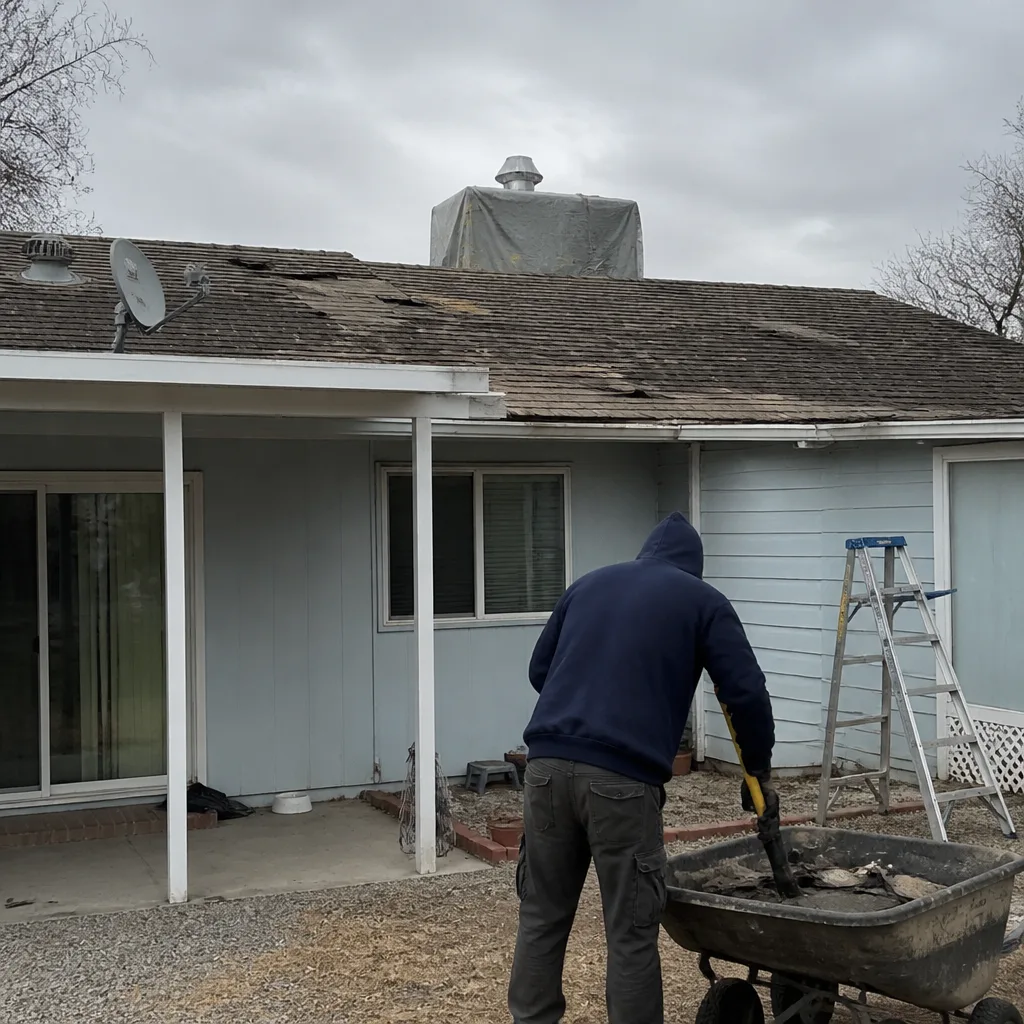 Before
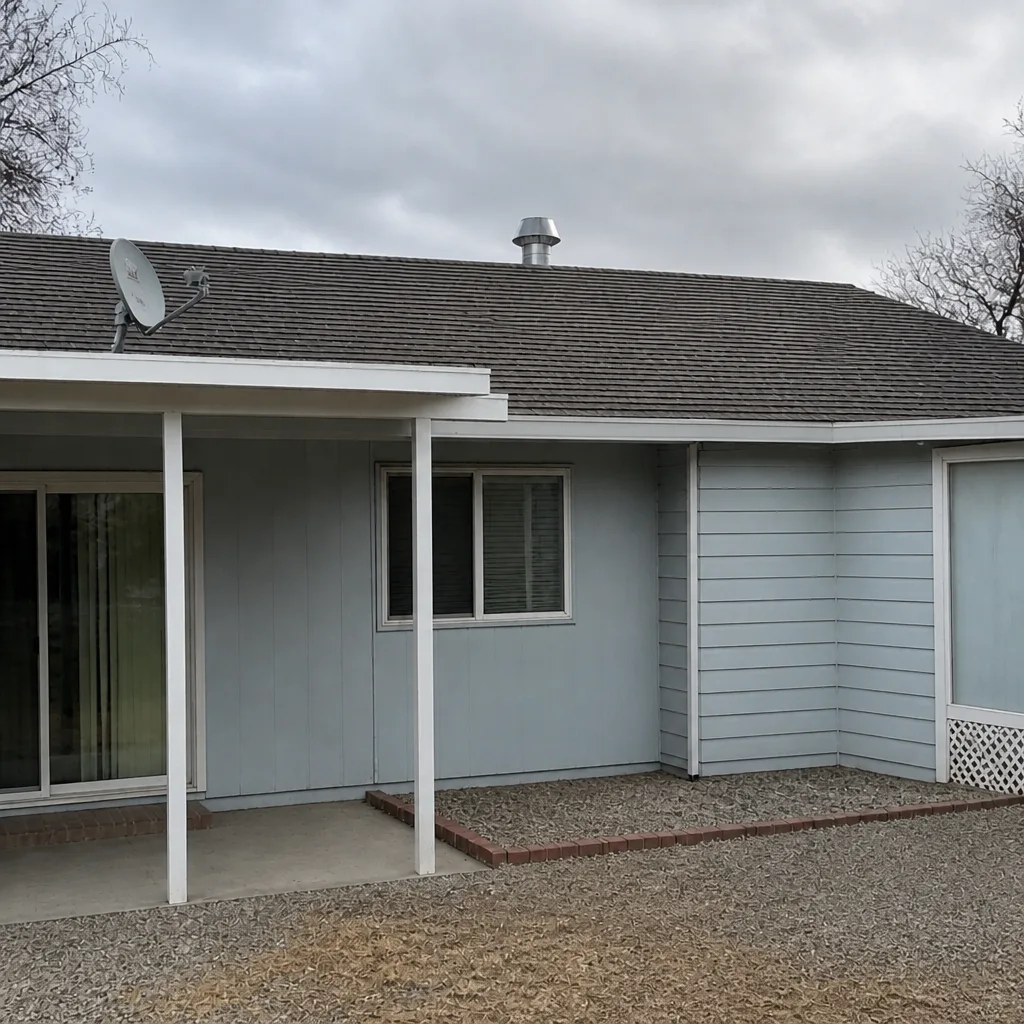 After
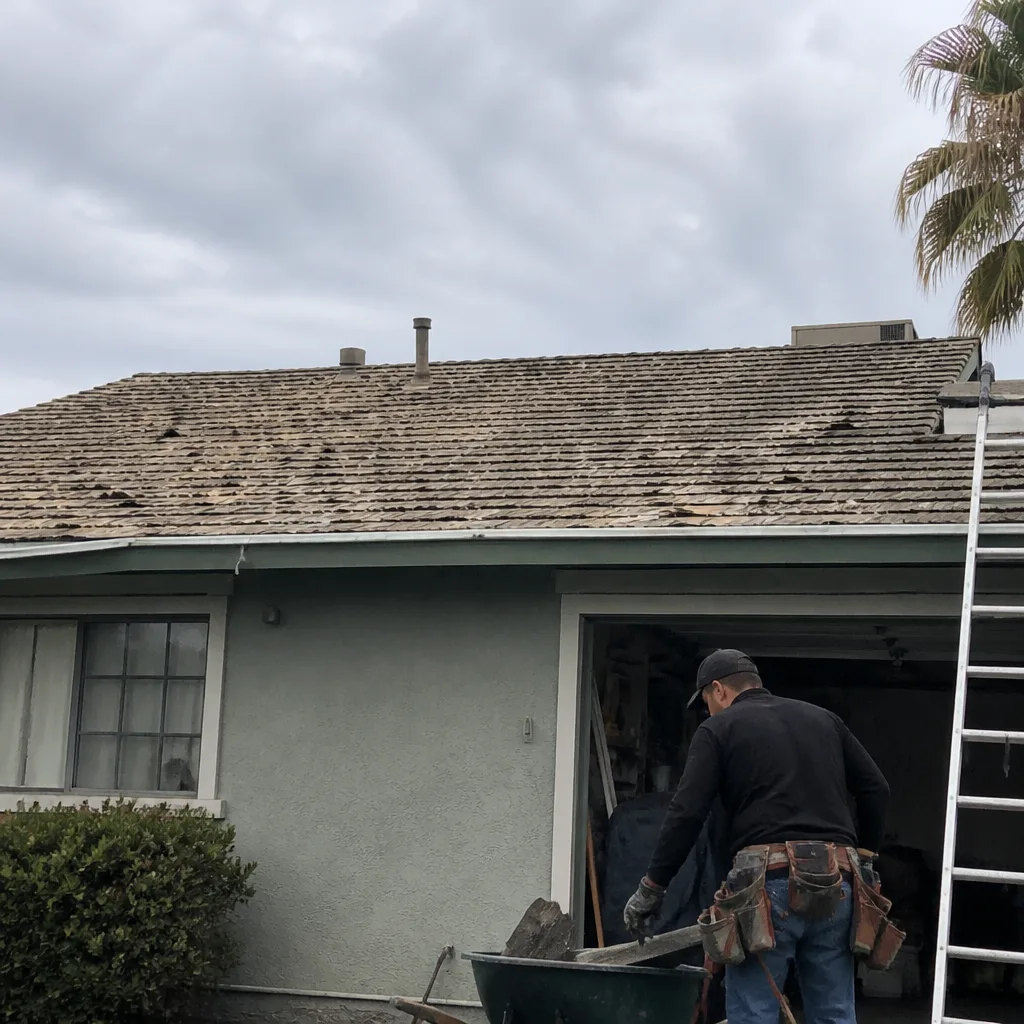 Before
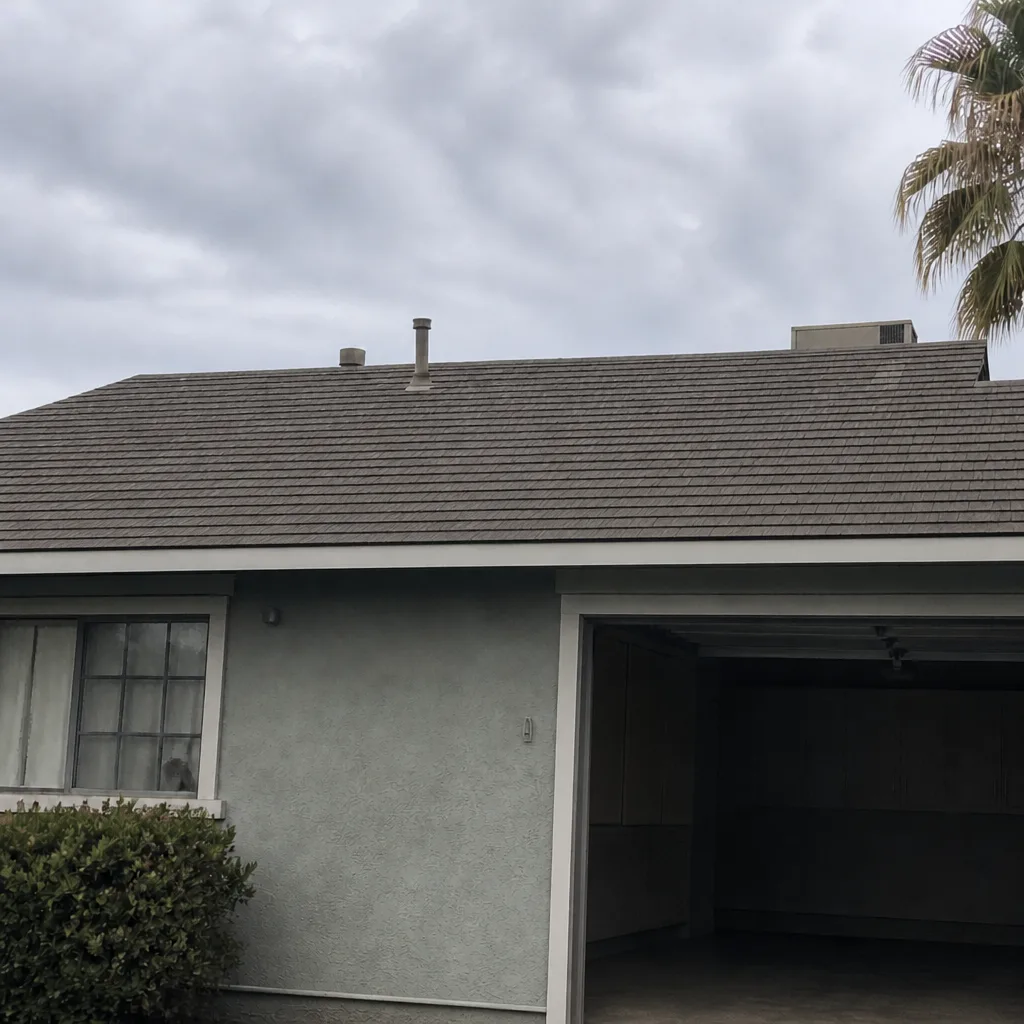 After
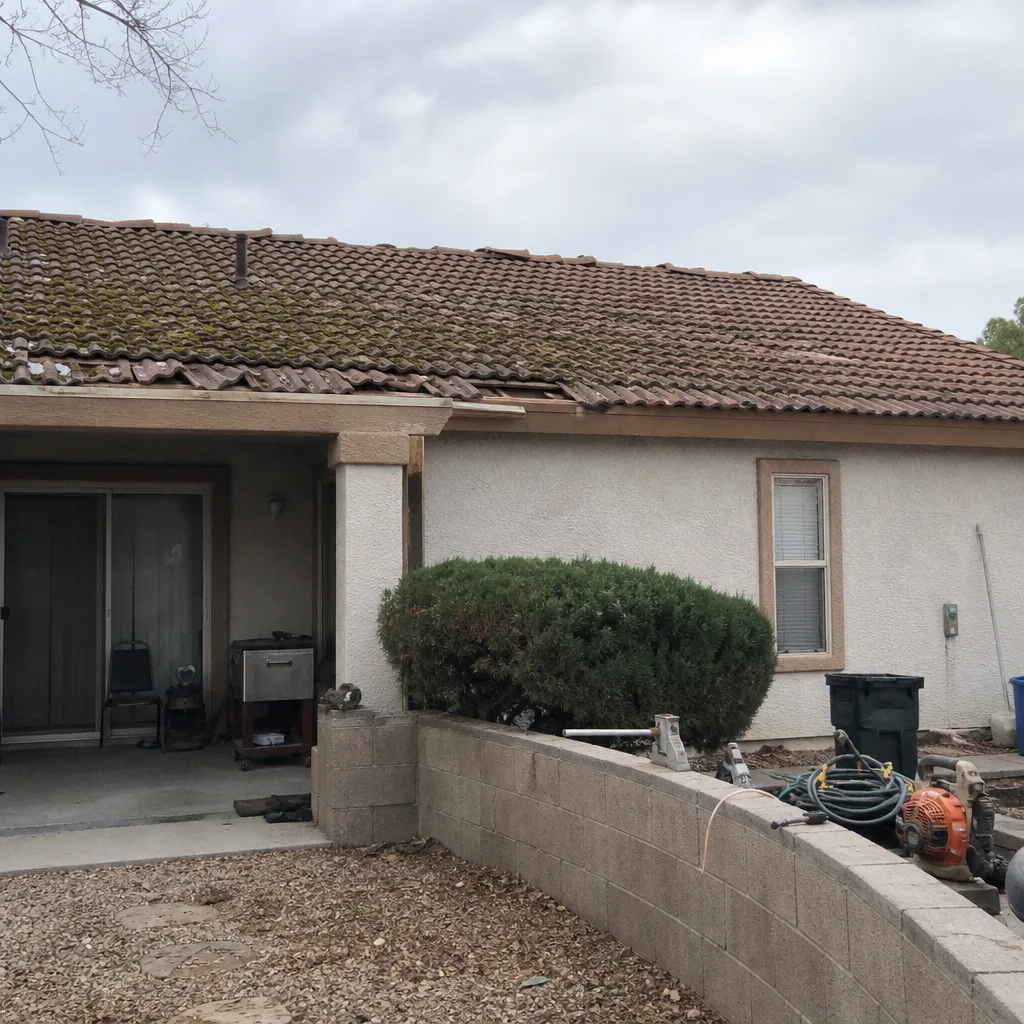 Before
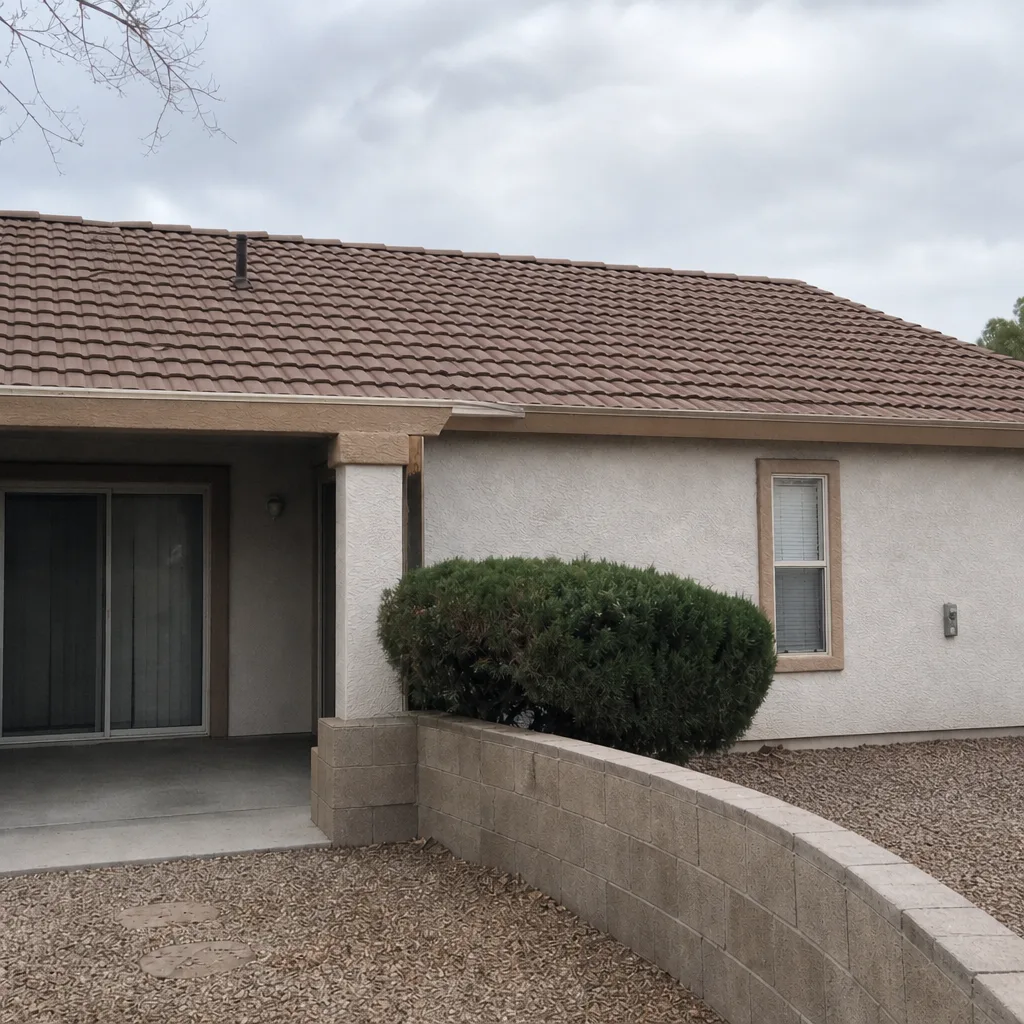 After
When to Call a Professional
Call a professional when any of the following apply: you can see soft decking from the attic or suspect it from above, water has stained a ceiling and continues to grow, flashing is lifting or rusted at a wall or chimney, a door-to-door crew has already tarped something, or you simply aren’t sure whether the problem is a repair or a replacement. Any roof task that requires walking on the pitch is a professional job. In this heat, climbing on shingles is both dangerous and damaging to the roof. We answer 24/7 and offer free estimates in Sunrise Manor. Call (888) 849-9122. Fast dispatch from 7am to 7pm, Sunday through Friday.
Frequently Asked Questions
Typical roof repairs in Sunrise Manor range from about $180 for a single pipe boot replacement to $1,500 or more for a multi-area repair, with most common fixes in the $250 to $900 range. The written estimate sets the final price. Call (888) 849-9122 for an exact quote – estimates are free.
You can and should do the ground-level and attic-hatch inspection to narrow down the source, but repairs that involve walking the pitch, replacing shingles, or working on flashing should be done by a trained professional. The combination of heat and height makes DIY roof repair genuinely risky in Sunrise Manor. Call (888) 849-9122 if you’d rather confirm the source before spending anything.
If a repair was done on the spot you can see, not the source, the leak will return. Water often enters at a flashing transition or a pipe boot and travels along a rafter before staining your ceiling feet away. The fix is to diagnose the source first. Call (888) 849-9122 and we’ll look at the whole roof, not just the stain.
No. Many small leaks are one flashing point, one boot, or one patch of shingles. A full replacement is typically the right call only when shingle wear, granule loss, or soft decking is widespread. The only way to know is an inspection. Call (888) 849-9122 and ask for an assessment before committing to either.
Most single-area repairs are completed in a visit, but the time depends on the material, access, and how much sheathing is involved. A written estimate will outline the scope, and you shouldn’t accept an estimate that doesn’t say what’s included. Call (888) 849-9122 with your symptoms and we can walk you through what to expect.
A reputable roofer sets the price in the written estimate and holds to it, especially when the full extent of the damage has been identified during the assessment. If additional damage is discovered (like wet decking) after the estimate, the written estimate should be updated before more work proceeds. Our written line-item quotes are designed to make sure you know the price before you agree. Call (888) 849-9122 for a free estimate.
The Bottom Line
The symptom a homeowner sees on a roof in Sunrise Manor is rarely the source. A stain near an interior corner usually points to flashing. A soft spot under a vent usually points to a boot. Granules in the gutter point to shingle wear. Lifted edges can be thermal movement, not a leak. The path through all of it starts with a diagnosis, not a tarp, not a sealant, and definitely not a door-to-door pitch. Do the ground-level checklist, note what you see and when, and let a professional inspect the roof before you spend on a repair. Repair when repair is right. Replace when replace is right. We’ll tell you which. Call (888) 849-9122. We answer 24/7. Fast dispatch from 7am to 7pm, Sunday through Friday.
Written by the team at Roofing Sunrise Manor.