
Last updated November 15, 2026
 Metal roofing
 Architectural shingles
 Tile roofing
 GAF
 Owens Corning
 Flat & low-slope
Free roof inspection with deck photos before we talk money - GAF and Owens Corning certified installation
Seasonal Roofing Care for Sunrise Manor: Year-Round Homeowner’s Guide
Most seasonal roofing guides fall apart the moment you try to use them in Sunrise Manor. They’re built around spring rain, autumn leaves, and a long winter of snow sitting on the deck. None of that describes what actually happens here, where a roof can bake at peak summer heat for weeks, then get hit by a monsoon downpour, then sit through a freezing night in January. That pattern doesn’t stress a roof the way a four-season climate does. It stresses it in four distinct phases, each one attacking a different weakness. This guide walks through those phases, tells you what to look at in each, and shows you how to build a simple 12-month calendar that takes under two hours of your own time per year.
Quick Answer
Seasonal roofing care in Sunrise Manor follows four stress periods rather than four traditional seasons: a pre-summer inspection window in April and May, monsoon saturation from July through September, a post-monsoon repair window in October, and winter freeze-thaw cycling through penetrations and edges from November through February. Handling the right task in the right window is what keeps a roof ahead of the damage curve. Most of the work is inspection and minor maintenance you can do yourself; the rest belongs with a trained roofer.
Styles & brands we work with
- Architectural shingles
- Metal roofing
- Tile roofing
- GAF
- Owens Corning
- Flat & low-slope
Table of Contents
- Phase One: April and May, the Pre-Summer Inspection Window
- Phase Two: How Monsoon Season Damages Roofs Differently
- Phase Three: The October Window After the Storms
- Phase Four: What Winter Actually Does to a Sunrise Manor Roof
- Building Your 12-Month Roofing Calendar
- Inspection, Repair, or Replacement: Which One This Year Needs
- Common Mistakes to Avoid
- When to Call a Professional
Phase One: April and May, the Pre-Summer Inspection Window
April and May are the last comfortable months before the heat settles in, and that makes them the most useful inspection window on the calendar. What you’re looking for now isn’t storm damage. It’s the small vulnerabilities that will get worse once the roof is under sustained thermal stress in June, July, and August. Sealant around penetrations, the condition of pipe boots, and the soundness of flashing are all easier to assess and cheaper to fix in May than in August.
Here’s what to check in this window:
- Pipe boots and vent collars. These are the rubber or plastic seals around plumbing vents and exhaust pipes. UV exposure dries them out and cracks them over time. A cracked boot lets water straight into the attic, and it’s one of the most common leak sources we see on Sunrise Manor roofs.
- Flashing at walls, chimneys, and valleys. Where the roof meets a vertical surface, the metal flashing and the sealant behind it take the most abuse. Look for lifting edges and worn sealant.
- Loose or lifted shingles. Walk the perimeter at ground level with binoculars and look for shingles that have curled, lifted, or lost granules. Granule loss on asphalt shingles shows up as bare patches or piles of grit in the gutters.
- Attic ventilation. In a climate where attic temperatures climb high, ventilation matters more than most homeowners realize. Blocked soffit vents or a failed ridge vent trap heat and accelerate shingle aging from underneath.
- Debris on the roof surface. Clear off anything sitting on the roof before summer. Debris holds moisture against the shingles and creates a starting point for the problems monsoon season will exploit.
The other reason to front-load this work is thermal stress. Once the roof deck is hot day after day, sealant cures faster, materials expand, and any weakness you left in place in May becomes a failure by September. This is the phase where you spend the least money and prevent the most damage. If you’d rather not climb a ladder, a standalone inspection is the honest way to start the year. We handle that as its own service precisely so you can find out what your roof needs before anyone talks about spending money on it.
Phase Two: How Monsoon Season Damages Roofs Differently
Monsoon rain in Sunrise Manor doesn’t behave like steady seasonal rain, and that changes the damage pattern. A roof that has dried out for months under the summer sun has sealant that’s shrunk and stiffened. Then a heavy burst arrives and drops a large volume of water in a short time. The result is two distinct failure modes: rapid saturation of dried-out sealant and debris dam buildup. Neither one shows up when rain falls gradually over days.
Rapid saturation of dried-out sealant
Sealant that has baked all summer loses elasticity. Under a slow, gentle rain, it has time to move with the roof. Under a hard monsoon burst, water finds the hairline gaps at the edges of the sealant and drives in. That’s why leaks often appear during the first real storm rather than gradually. The fix is preventive: sealant that’s inspected and refreshed in the pre-summer window stands up to the monsoon far better than sealant that’s been baking dry since spring.
Debris dam buildup
In a place where dust, grit, and windblown debris accumulate on the roof through the dry months, the first hard rain washes all of it into valleys and against flashing. It packs up and forms a dam. Water then backs up under shingles instead of running off. The places this happens most are roof-to-wall transitions, valleys, and anywhere drainage is already marginal. During monsoon months, clearing debris from these spots after a major storm is worth more than any other single task.
What to watch for during the monsoon window
- Water stains on ceiling or walls after a storm, even small ones. They usually point to a leak that started higher up.
- Granules washing into gutters and downspouts in visible quantities after a storm.
- Visible debris dammed up in valleys or against flashing.
- Loose flashing or lifted shingles around penetrations.
If you spot a leak during the season, don’t wait for it to get worse. roof repair handled quickly during the monsoon window prevents interior damage and keeps the problem small. Call (888) 849-9122 to schedule a free estimate. We answer 24/7. Fast dispatch from 7am to 7pm, Sunday through Friday.
Phase Three: The October Window After the Storms
October is the quiet month, and that’s exactly why it matters. The monsoon has ended. The winter temperature drops haven’t started. Damage that happened during the rainy season is still small, and the materials are still warm enough to work with cleanly. This is the best window in the year for addressing storm damage before the cold stresses any exposed spot.
Here’s what to address in October:
- Walk the roof after the season closes. Look for shingles displaced by wind, flashing that loosened, and any area where debris backed up water.
- Repair rather than patch where possible. A patch on a lifted shingle lasts a season. A proper repair using matching materials lasts far longer. This is one of the places where working with multiple shingle brands pays off. Because we install across IKO, Atlas, Tamko, Boral, and the other major manufacturers, we can match the existing roof rather than install whatever a single supplier happens to stock.
- Seal around penetrations and flashing. Refresh any sealant that dried or cracked over the summer.
- Clear the drainage paths again. Any debris that got pushed into valleys or gutters during the monsoon should come out now, not stay in place through winter.
- Confirm the attic is dry. Check for moisture, staining, or damp insulation. A leak that started in the monsoon may have gone unnoticed on the roof but left a mark in the attic.
The other reason October is the right month for repair work is scheduling. Roofing contracts fill up when storms hit hard or when a cold snap forces emergency repairs. Doing the work in the quiet window means you deal with small fixes on your own timeline instead of during a crisis. If you want a straight answer on whether the roof is in shape to carry through winter, start with an inspection. Know exactly what you’re dealing with before spending a dollar.
Phase Four: What Winter Actually Does to a Sunrise Manor Roof
Winter here doesn’t bring snow load the way northern climates do, and that’s a relief. But cold nights still do their own kind of damage, and it’s the kind that goes unnoticed because there’s no visual drama. Freeze-thaw cycling is the culprit. Water gets into a crack or a gap during the day, then the temperature drops below freezing at night, and the water expands as it freezes. That expansion pushes the crack wider. Repeat it through the winter, and a small gap becomes a real one by spring.
Where this happens most:
- Around penetrations. Pipe boots, vent collars, and anyplace a hole goes through the roof. Water sits at the edges, freezes, and works the seal loose.
- At the roof edges and flashings. The metal at the edge of a roof expands and contracts with temperature swings, and sealant behind it goes quickly.
- In valleys. Water that pools in a low spot and then freezes at night does more damage than water that drains off cleanly.
- At exposed fastener heads. Any exposed nail or screw head is a spot where water can sit and freeze.
Winter is not the season for major repairs, because cold makes some materials harder to work with. It is the season for observation and for quick fixes when a leak shows up in the house. If anything suspicious appears in the winter, get it checked fast. The right move is to catch it before the freeze-thaw cycle has months to work. Inexperienced homeowners often wait until spring, by which point a small winter leak has become an interior problem. Bringing in a professional over winter is a real call worth making. Our technicians have up to 12 years of experience in this climate, and they know what a freeze-thaw leak looks like versus a monsoon leak.
Building Your 12-Month Roofing Calendar
The point of all this is a calendar you actually use, not a binder you put on a shelf. The schedule below takes under two hours of homeowner time across the year. It breaks the task into four phases and gives you a short list to handle in each one. Add reminders to your phone for the start of each month and you’ll never miss a window.
- April, roughly 30 minutes: pre-summer inspection. Walk the perimeter with binoculars, look for lifted shingles, check attic ventilation, clear debris.
- May, roughly 20 minutes: refresh vulnerable sealant. Either do the small sealant work yourself (only if you’re comfortable on a ladder and the roof is safe to walk) or call in an inspection to catch what you missed.
- June, roughly 10 minutes: close out pre-summer tasks. Confirm everything from April and May is handled. Once the heat peaks, you’re in observation mode.
- July and August, roughly 15 minutes per month: monsoon observation. After each major storm, walk the perimeter and check the attic for stains. Clear debris from valleys and flashing after storms.
- September, roughly 10 minutes: final monsoon check. Anything not resolved during the season gets flagged for October.
- October, roughly 30 minutes: post-monsoon repair window. Address storm damage, refresh sealant, clear drainage paths, check insulation.
- November, roughly 15 minutes: winter prep. Confirm drains are clear and flashing is sealed before the freezing nights start.
- December through February, roughly 10 minutes per month: winter watch. Check for interior leaks after cold snaps and note anything for spring inspection.
The total homeowner time is under two hours a year. If any phase turns up something you’re not certain about (a stain, a missing shingle, a loose flashing, water in the attic) that’s the moment to call. Our team offers roof replacement and repair services across Sunrise Manor, and the inspection is the starting point that keeps the calendar honest. On annual timing, the heaviest month is October, because that’s when the most useful work gets done.
Inspection, Repair, or Replacement: Which One This Year Needs
This is the question underneath every seasonal checklist: after you’ve walked the roof and written down what you saw, what do you actually do? The answer isn’t always obvious, and the honest version is one almost no contractor will give you. We’ll give it. Start with an inspection, because knowing what’s on the roof is the only fair way to decide what happens next.
When inspection alone is enough
If the roof is holding, no leaks have shown up, and what you found in the walk-around was cosmetic or minor, a seasonal inspection is the whole job. A standalone inspection tells you the actual condition of the materials and usually catches small issues before they become leaks. That service exists because homeowners deserve to know what their roof needs before anyone pitches a repair.
When repair is the right call
Repair is right when the damage is localized. One lifted shingle, a cracked pipe boot, flashing that’s pulled away at one wall. In those cases, restoring the specific spot with matching materials is the correct answer. Because we install across seven leading manufacturers (GAF, CertainTeed, Owens Corning, IKO, Atlas, Tamko, and Boral), we match the existing product rather than put a mismatched section on the roof. Repair when repair is right. Replace when replace is right. We’ll tell you which.
When replacement is the honest answer
Replacement becomes the right call when the damage is broad or the materials are near the end of their service life. If the same area has been repaired repeatedly, if the shingles have widespread granule loss, or if the roof deck has been compromised, patching it again just delays the inevitable. The right move in that case is a full replacement done once. If your roof is in Sunrise Manor and you’ve been told you need replacement, get a second opinion. It’s a major spend and worth a fresh inspection.
Common Mistakes to Avoid
- Treating seasonal care like it’s meant for a four-season climate. Following a guide written for snow-country maintenance means you’ll miss the actual windows here. The calendar in this guide is what the local climate needs, and the home maintenance guides you see elsewhere aren’t written for it.
- Ignoring sealant through the summer. Sealant that dries out during the pre-summer months is the reason the first monsoon gives you a leak. Refresh it in May and you’ll avoid the July call.
- Waiting until spring to address autumn leaks. A winter freeze-thaw cycle can turn a small monsoon leak into a real problem by the time the weather warms. If you see a stain in December, don’t put it on the spring list.
- Cleaning debris only once a year. In a climate that moves as much dust and grit as Sunrise Manor does, a single annual cleanup isn’t enough. Clear valleys and flashing after each major storm.
- Assuming a patch is a repair. A quick patch on a lifted shingle will fail again next season. The right fix matches the material and seals the spot, not just covers it.
- Trusting a bid that comes before an inspection. If someone quotes a full replacement before they’ve actually looked at the roof, that’s not an assessment. It’s a sales pitch.
- Skipping the attic. Half the story of roof condition is visible inside the house. Water stains on ceiling or insulation are evidence you can’t see from the ground.
When to Call a Professional
Not every task on this calendar needs a roofer. But some definitely do, and getting the call wrong costs more than the inspection would have. Call a professional when you find active water intrusion, when a leak appears inside the house and you can’t trace it, when flashing has visibly pulled away from a wall or chimney, when shingles have gone missing in a section wide enough to expose the deck, or when the roof isn’t safe for you to walk. Those are situations where a trained roofer should be looking at the roof directly. We answer 24/7. A call outside dispatch hours is booked into the next opening, Sunday through Friday, 7am to 7pm.
You should also call when you’ve walked the roof and aren’t sure what you’re looking at. Homeowners often can’t tell the difference between aging shingles and failing shingles. A standalone inspection settles that question. Roofing Sunrise Manor offers free estimates in Sunrise Manor; call (888) 849-9122 to schedule yours. We’re happy to look at what you’ve found and give you a straight answer on what it needs.
See the difference
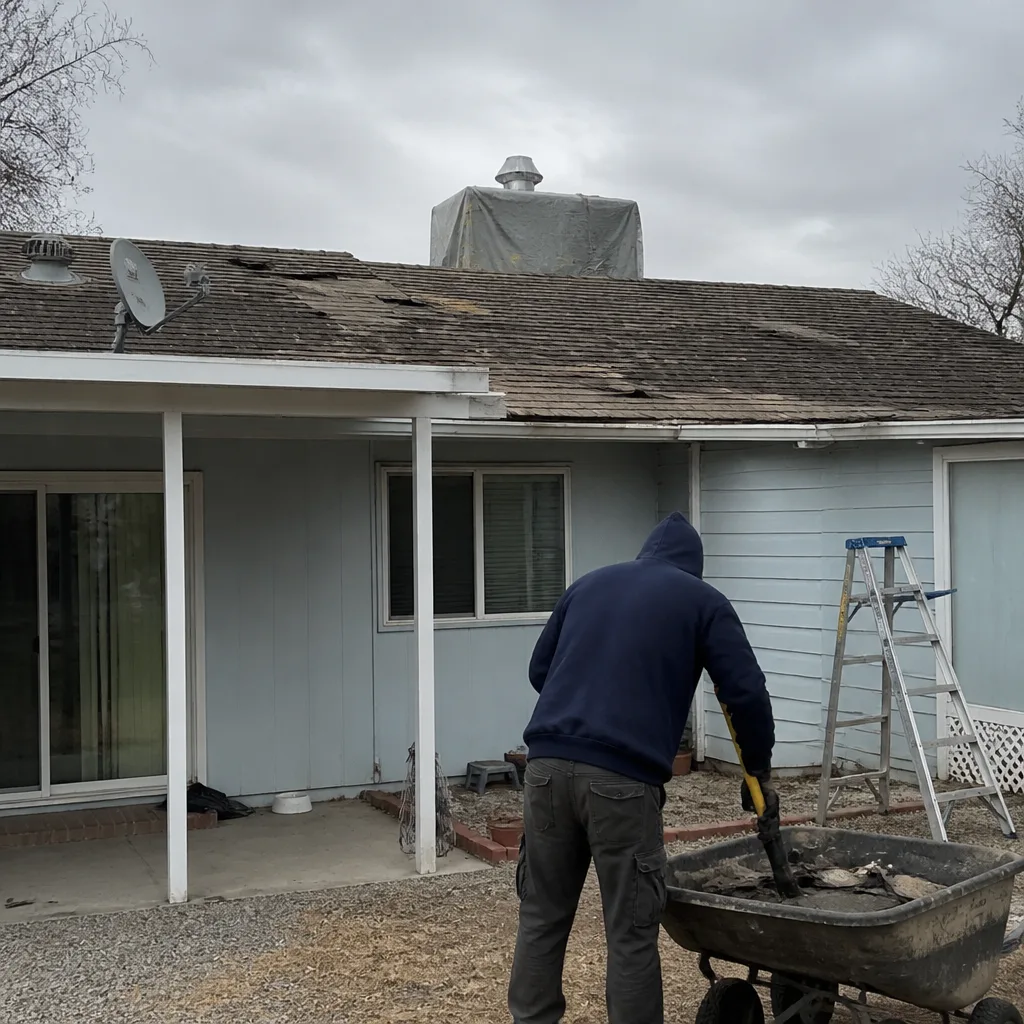 Before
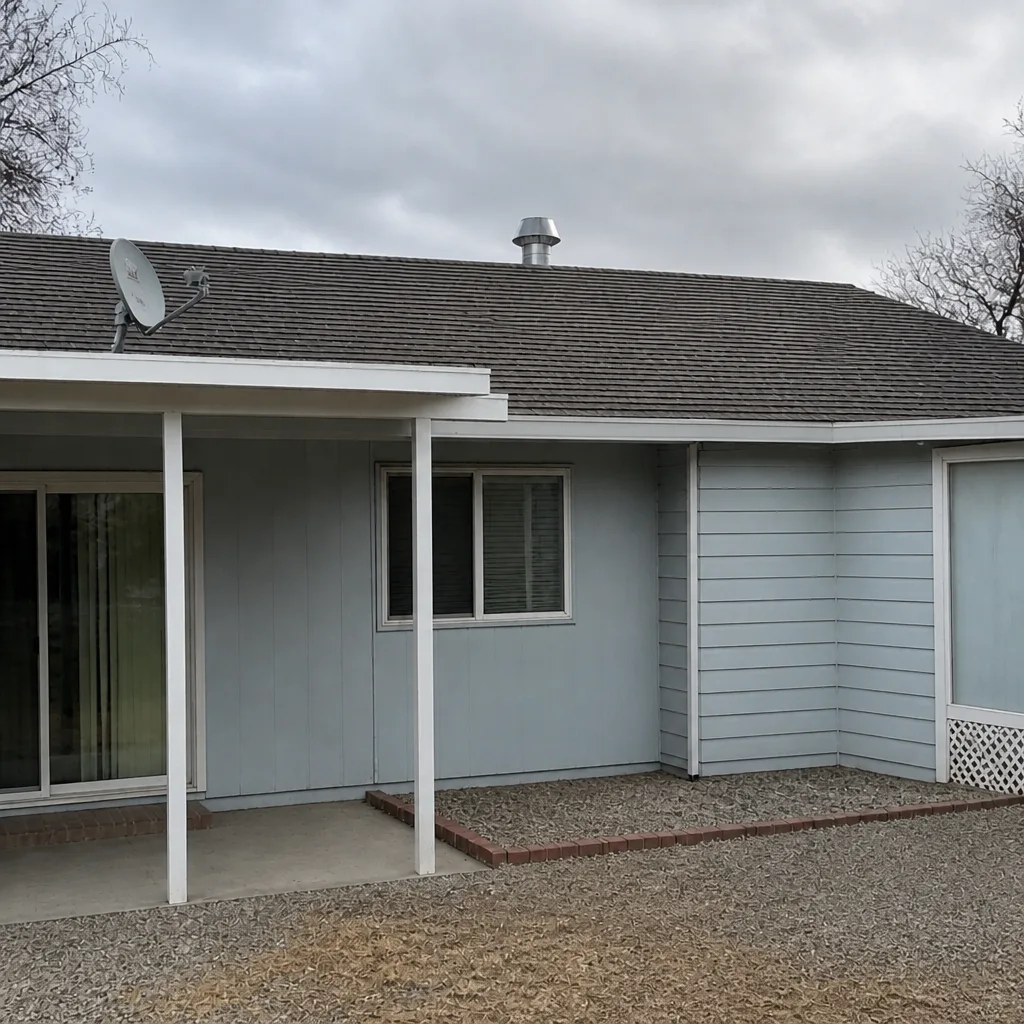 After
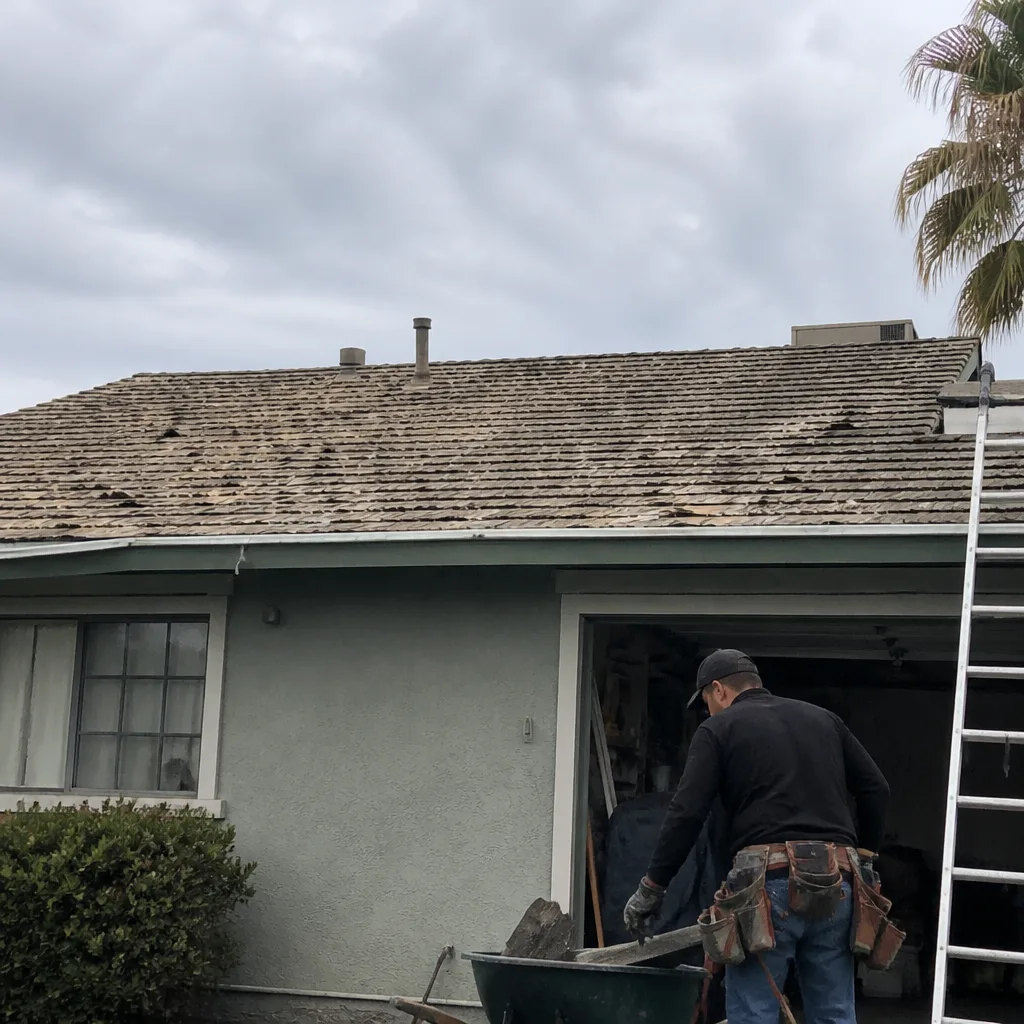 Before
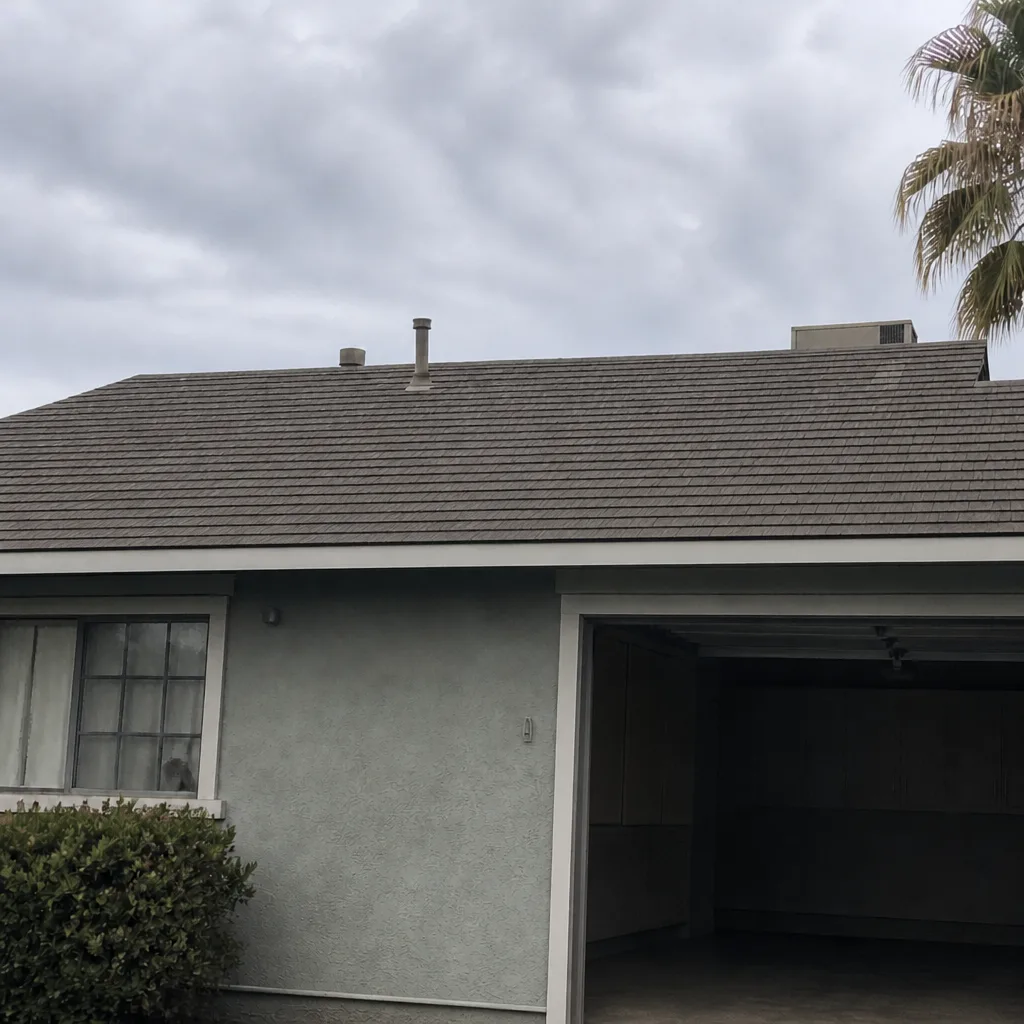 After
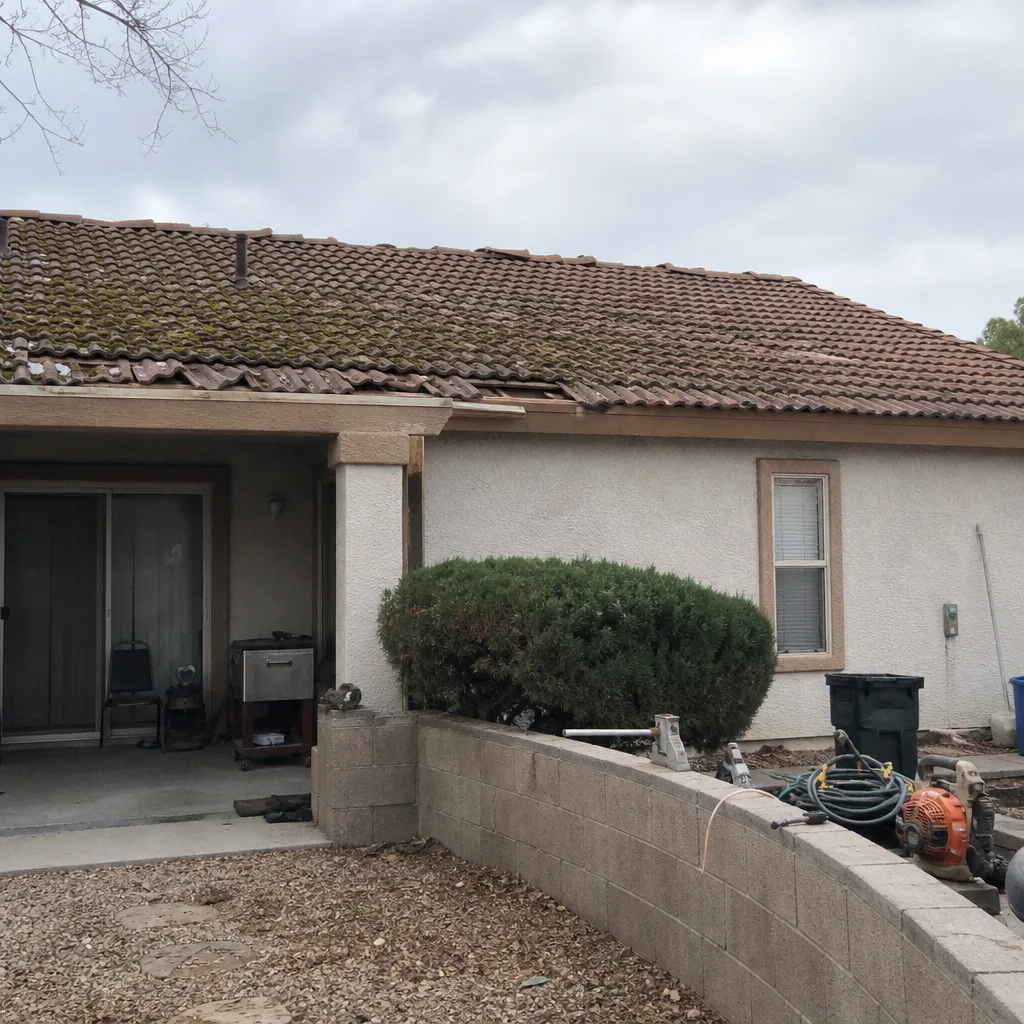 Before
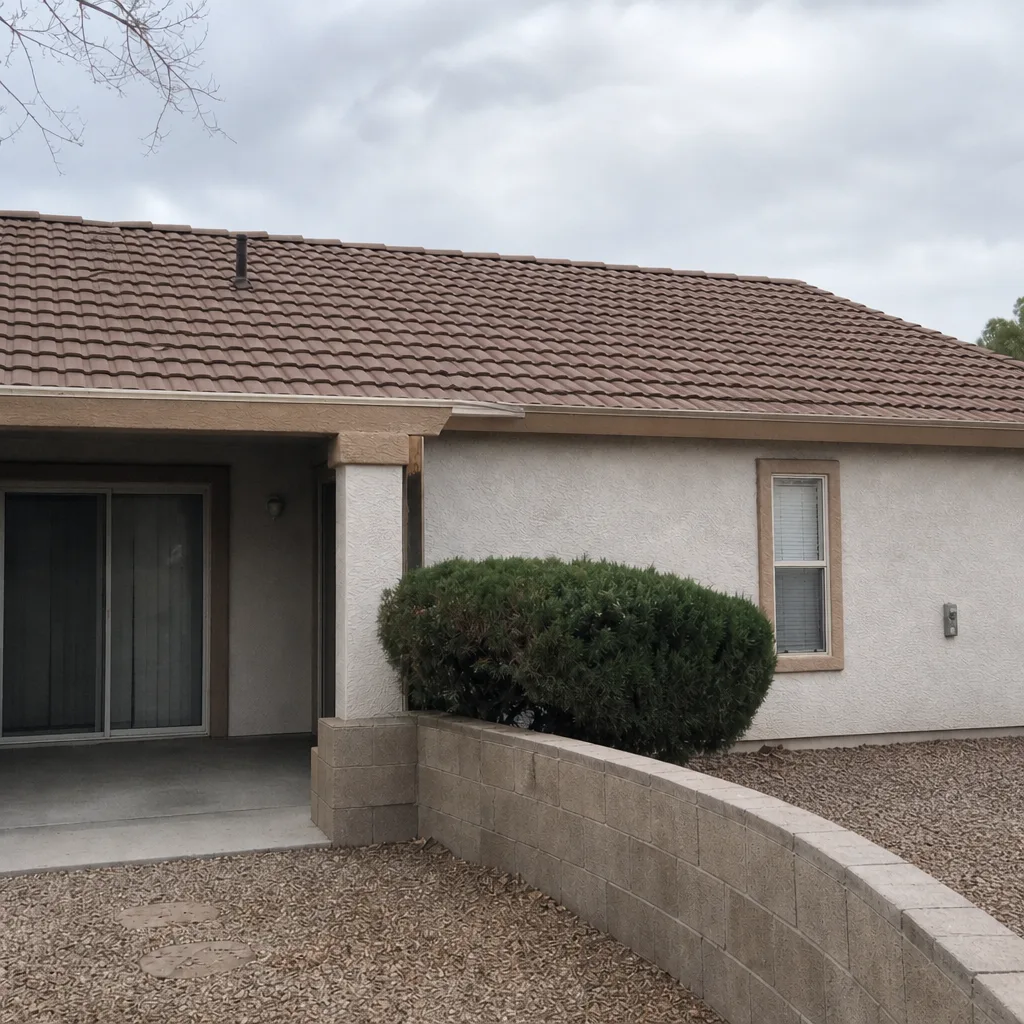 After
Frequently Asked Questions
April and May are the most important, because that’s the window where you can still catch and fix a problem before the summer heat makes it worse. Sealant and pipe boots that get refreshed in May stand up to the monsoon far better than ones left to bake. The second most important window is October, when post-monsoon repairs are still small. Call (888) 849-9122 if you’d rather have the pre-summer inspection done first.
No. A roof that’s been inspected and maintained ahead of the season usually carries through the monsoon without leaking. The pattern that causes trouble is dried-out sealant plus a hard burst of rain; refresh the sealant before summer and the roof will handle the water. If a leak has been recurring, an inspection will find the source. Call (888) 849-9122 to schedule one; estimates are free.
An annual inspection in the April to May window is worth doing, and it’s especially worth it if the roof is past the midpoint of its service life or has had any prior repairs. You can inspect what’s visible from the ground yourself, but a standalone professional inspection looks at the flashing, penetrations, and deck condition that you can’t see from below. Call (888) 849-9122 to book one.
Localized damage needs a repair, and widespread damage or worn-out materials need a replacement. The way to tell them apart is by having the roof inspected, not by guessing from the ground. We install across GAF, CertainTeed, Owens Corning, IKO, Atlas, Tamko, and Boral, so the recommendation is based on what fits your roof, not on which brand we’d prefer to sell. Call (888) 849-9122 for a free estimate.
Freeze-thaw cycling widens existing cracks and gaps by freezing water that gets into them. A small gap that starts the winter opens wider by spring because the ice expansion pushes on it nightly. The spots most at risk are penetrations, roof edges, and valley low points. Call (888) 849-9122 if you suspect winter damage; estimates are free.
No, because the price is set per job by the written estimate. You’ll be shown what needs to be done and what it will cost before any work begins, and the written estimate is what sets the final price. This is the way we handle both repair and replacement, and it’s what makes the estimate worth getting. Call (888) 849-9122 to schedule yours.
The Bottom Line
Seasonal roofing care in Sunrise Manor isn’t a four-season checklist. It’s a four-phase cycle shaped by the actual climate: pre-summer inspection and sealant refresh in April and May, monsoon observation and debris clearing through July and September, the October repair window for anything the storms left behind, and winter freeze-thaw awareness through penetrations and edges. Handle each phase in its right window and a roof survives the year with far less damage than it would otherwise. Inspection is the starting point that keeps the cycle honest, and repair or replacement is the decision the inspection makes clear. Roofing Sunrise Manor works across seven leading shingle brands and offers standalone inspections, so the recommendation is based on what your roof needs. We specialize in roofing, from Roofing Sunrise Manor services all the way through the full repair and replacement lifecycle, with no hand-off to a subcontractor for a different scope of work.
Ready to get ahead of the cycle this year? Call (888) 849-9122 for a free estimate. We answer 24/7. Fast dispatch from 7am to 7pm, Sunday through Friday. We’re closed Saturday.
Written by the team at Roofing Sunrise Manor.